

Founded in 1989, this American company has taken the market by storm over the past thirty years. Gradually perfecting its devices and utilizing the miniaturization of electronics, it has expanded its offerings from military products (the first customer was the US Army) to civil aviation, sports, automotive, tourism, and even pet accessories. This is thanks to its innovative approach to GPS technology, in which Garmin specializes, implemented for new applications, continuous quality improvement, and the development of a database of accessory products. This has allowed it to stay ahead of the competition and earn customer trust. Today, for many, the word Garmin is almost synonymous with a cycling computer and a guarantee of quality. In this post, we will introduce the three lines of cycling products currently offered by the titular hero and explain the benefits they offer.
Garmin's flagship meters are more like on-board computers
Garmin doesn't aim for the lower end of the cycling computer market. Currently, the cheapest model in the range is the Edge 130 Plus, available for around 1,000 PLN. This price includes a black-and-white display, basic navigation, and a 12-hour battery life. While it offers all the basic features, we recommend paying a little more for the higher-end model (530), which offers a color display, but above all, fully functional all-terrain navigation with turn signals and compatibility with power meters and electronic shifting systems. Subsequent versions include touchscreen and larger displays, better processors, sharp curve warnings, longer battery life, and increasingly sophisticated ride data. The Edge Explore model is a bit different, focusing on the best possible navigation, with training functions taking a backseat (though it still outperforms most typical cycling computers in this regard). It's a good choice for gravel riding or trekking, for example.

How is Garmin different from traditional devices?
Primarily, it relies on GPS technology. Garmin doesn't need a magnetic speed sensor—it draws its movement data from satellites. An external sensor is recommended for riding in areas with poor reception or on a trainer, and is mounted only on the hub. In practice, few people use it, nor do they use a similar cadence sensor. At this budget, many users opt for a power meter, which also provides information on crank rotations. And here's where the great thing comes in: integration. Garmin allows you to connect multiple devices to a single central unit using Bluetooth, Wi-Fi, and ANT+ technologies.
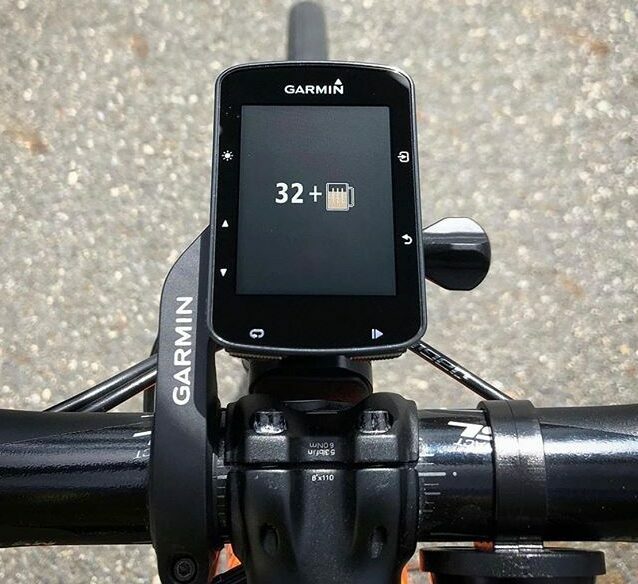
On a single display, you can gather information about the gradient of a climb, your heart rate, current gear, power output, and a million other things, as desired or needed. Furthermore, when you receive a text message, the system will display a relevant notification. It also works the other way around – you can, for example, control the lights or upload your ride data to Strava. It's worth mentioning that the Garmin can also be controlled externally – some levers have special buttons. It will remind you to hydrate (main photo of this article), and if you hit a tree, your friends will be notified of the emergency. Off-road, the navigation can guide you along paths most frequently used by locals – a very useful feature in a new location. The list of features, such as the number of jumps and time spent in the air, is endless.
In practice, this means a comprehensive control center for training and a modern bike, which at some level is simply necessary, and for many will be a great convenience or simply... a great gadget.
Garmin power measurement
There's no shortage of solutions on the market for measuring a cyclist's power output, often differing significantly in the technology used. Garmin has focused on pedals and claims their accuracy is within a percentage point. This is a very good result. Power-measuring pedals add more weight than the popular Stages cranks, but they offer two significant advantages. First, they're easy to transfer from one bike to another. You can also easily swap out the housings for a different cleat standard (SPD-SL is standard, but SPD and Look Keo are available as optional extras), though this is probably too much hassle to do regularly. Second, pedals provide measurement from both feet, which many coaches will surely appreciate. The sensors also help optimize cleat angles, and you'll also receive data on how much you're riding standing and sitting. Of course, there's also cadence.
The downside? Price. Depending on the version and distributor, the Garmin Rally kit costs between 3,000 and 5,000 PLN. The accessory housings alone cost around 1,000 PLN.
Lights and... radars
Is there anything new to bicycle lighting beyond longer runtime and brighter light? Yes, it is, and Garmin decided to approach the matter from a slightly different angle than most companies, creating the Varia series. They can operate independently, but their full capabilities can only be utilized with Garmin computers (which is no surprise). The light intensity adjusts in real time to the ambient brightness and the cyclist's speed, and can, of course, be controlled from the control unit. Not enough? So let's move on to the rear light, which is equipped with... a radar. It detects approaching cars from as far as 140 meters away and sends audible and visual warnings (as preferred) to the computer, smartphone, or both. 21st century, ladies and gentlemen.

Is Garmin the best?
In terms of accessory availability and the number of compatible devices, there's no doubt about it. This applies primarily to computers/computers. There are, of course, viable alternatives, often at attractive prices. However, they require more knowledge and commitment if you want to connect them to other devices. Garmin wins in the "pay more, but everything works with everything" category. However, if you have some time, it's worth checking out devices from brands like Lezayne or Wahoo before buying. Perhaps they'll be better suited to your needs?
There's plenty to choose from when it comes to power meters, and the American brand definitely isn't the leader in terms of price-to-quality ratio. For most people, the proven Stages at a much lower price will suffice. For now, I'm treating the lights as a cool curiosity, but they'll certainly convince a lot of buyers. One thing's for sure: this isn't the last word from Garmin.
All photos used in the article are by Glory Cycles


Leave a comment