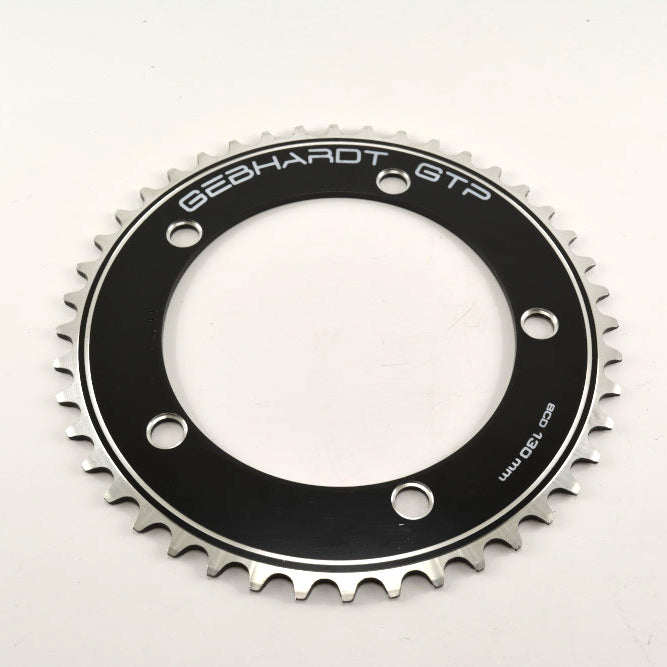
Chainring is the common name for the front sprocket of a bicycle (attached to the right crank arm). The sprocket is attached to the bottom bracket shaft via the crank.
The front sprocket is a crucial component of a bicycle's drivetrain. It's made of aluminum or steel. Depending on its intended use, it has varying thickness and number of teeth. Single chainrings are used on track bikes, fixed-gear bikes, and single-speed bikes. This type of sprocket features greater thickness and tooth spacing, allowing for the installation of wider chains that are more resistant to stretching (or even breaking).
Road and MTB cranksets feature two or three chainrings. Recently, a new generation of narrow-wide chainrings was introduced. Thanks to their specially shaped teeth, they allow for 1x10 and 1x11 drivetrains without worrying about chain warping or potential chain drop (unless a tensioner is used).
Shimano has introduced three standards (widely adopted by other manufacturers) regarding the shape and spacing of sprocket teeth. These are UG ("Uniglide") – for the cheapest versions of components; HF ("Hyperglide") – for higher-end groupsets, featuring specially designed bends and notches for more secure chain guidance; and IG ("Interactive Glide") – a now practically obsolete version that was originally intended as an improved version of the HF standard.
Mountain bikes typically have three chainrings with a tooth count of 22, 32, and 44 (sometimes also available in 22/28, 32/38, 48/42/52). Road bikes typically have chainrings with 53 and 39 teeth (or 50 and 36). Single-speed bikes choose the chainring (in terms of the number of teeth) based on the user's preferences.
Most customers aim for a gear ratio (the ratio of the number of teeth in the chainring to the number of teeth in the chainring) of around 2.5-3. This can result in configurations such as 53x18, 52x16, 46x16, etc. Besides the number of teeth and adjustments to the chain thickness, there's another parameter to keep in mind – BCD. This is the spacing of the bolts securing the chainring to the crank arm spider.
MTB cranksets use four-bolt chainrings, while road and track bikes use five. For city bikes, we typically use aluminum chainrings. Our store offers chainrings from brands such as Gebhardt, Leader, Quotes, and Stronglight.
Our countertops are available in three colors: silver, black and white.