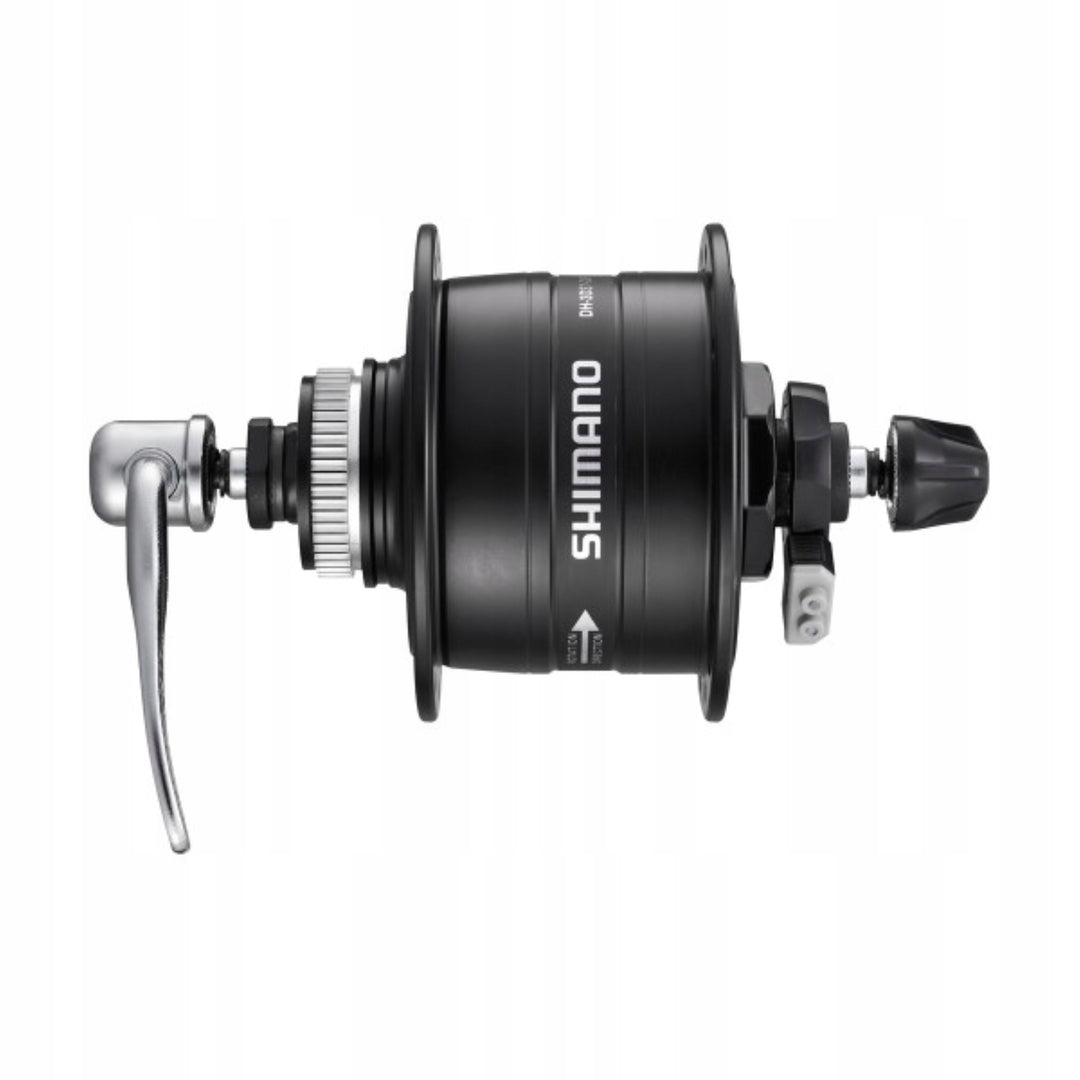
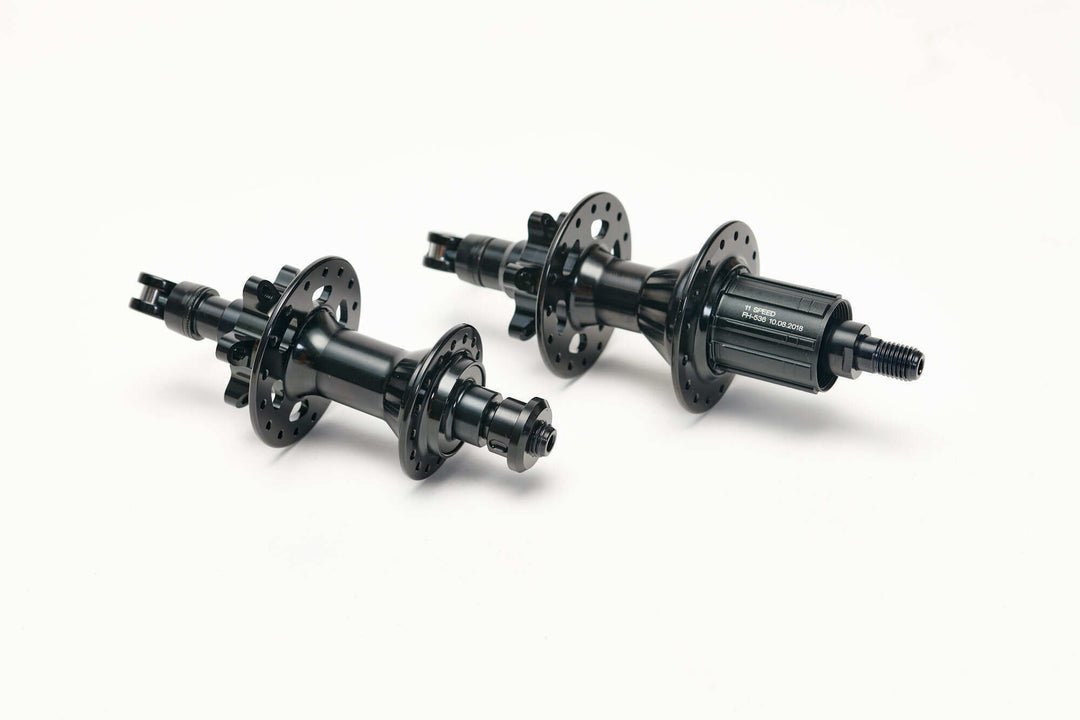
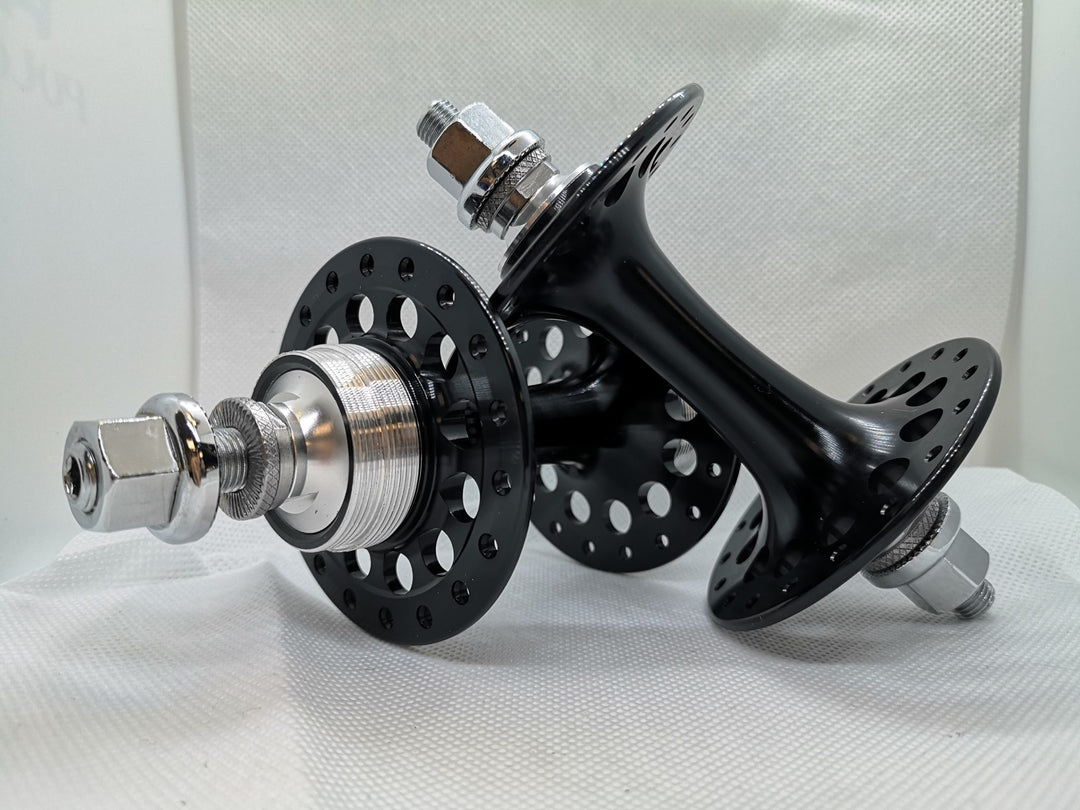
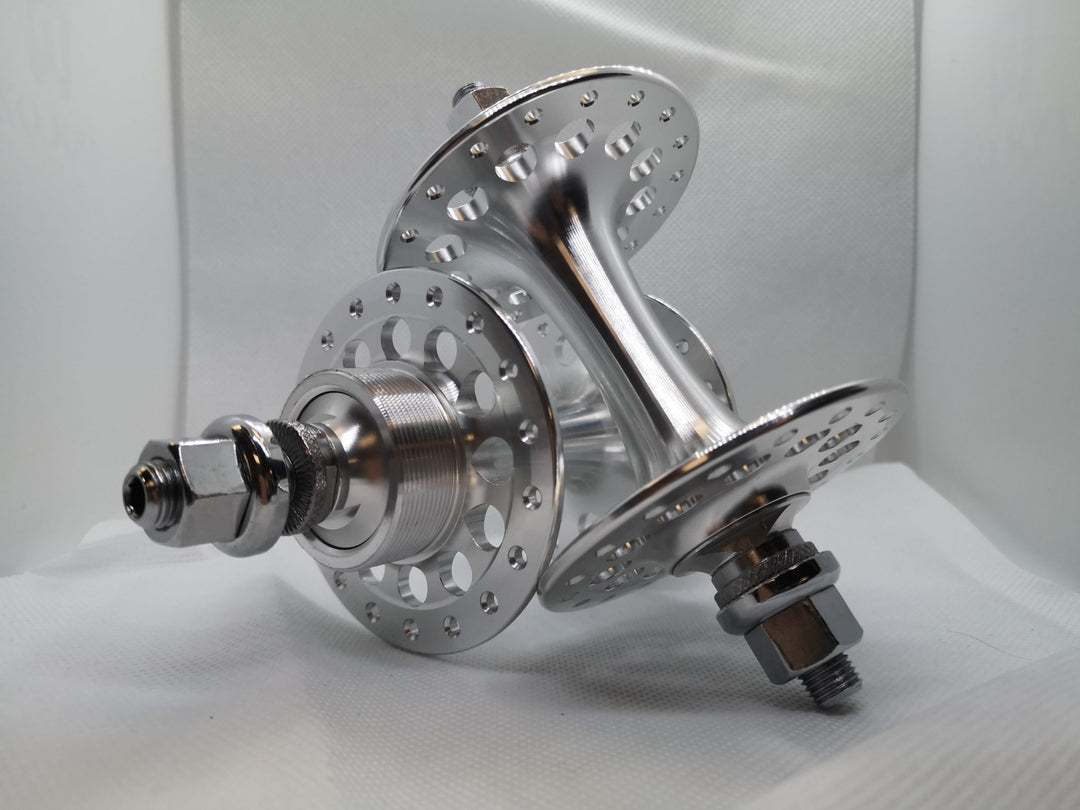
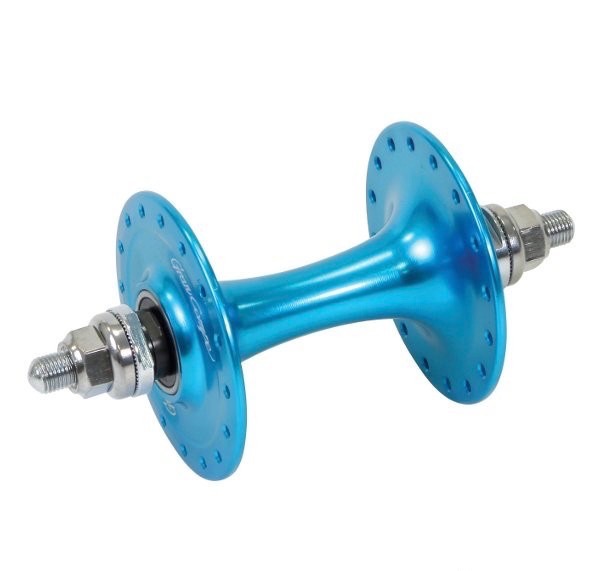
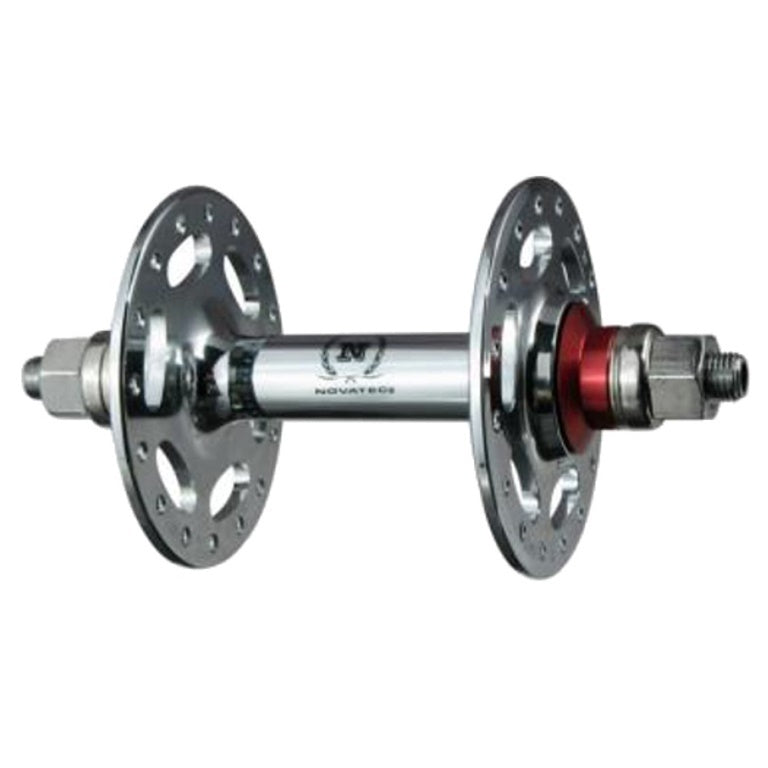
This is a bicycle wheel component that rotates on an axle attached to the frame. There are several standards for this type of mounting. The simplest method is to secure the hub axle with standard nuts. This type of mounting requires the use of a suitable wrench to loosen and re-tighten the wheel each time. For many years, hubs with a quick-release mechanism were the standard. For several years now, the dominant and undisputedly best solution has been thru-axles, which provide significantly improved wheel and frame stiffness, as well as more reliable, repeatable assembly without the need to adjust the brake caliper after removing the wheel.
Both hubs in a bicycle are designed as sleeves containing bearings. The sleeves are usually made of aluminum. Ball or cartridge bearings are encased within them. The latter offer a much longer service life but are also noticeably more expensive. The sleeves have two flanges with holes for mounting the spokes. In the simplest bicycle setup (fixed gear), both hubs function exactly the same. However, the rear hub usually has a freewheel (threaded hubs onto which the sprockets are screwed). Alternatively, rear hubs can have planetary gears (e.g., Shimano Nexus, Sram Automatix). Some rear hubs, instead of a freewheel mechanism, have a so-called coaster brake—a type of hub equipped with a braking system activated by pedaling movement opposite to the bicycle's power. Front hubs with a built-in dynamo are less common, allowing them to power bicycle lights.
Demountable hubs require regular inspections, including disassembly, bearing wear assessment, and lubrication. Non-demountable hubs also require occasional adjustment. Adjustment is performed using locknuts, which adjust the ball pressure on the races. Too much pressure causes the hub to rotate too slowly, while too little causes play.