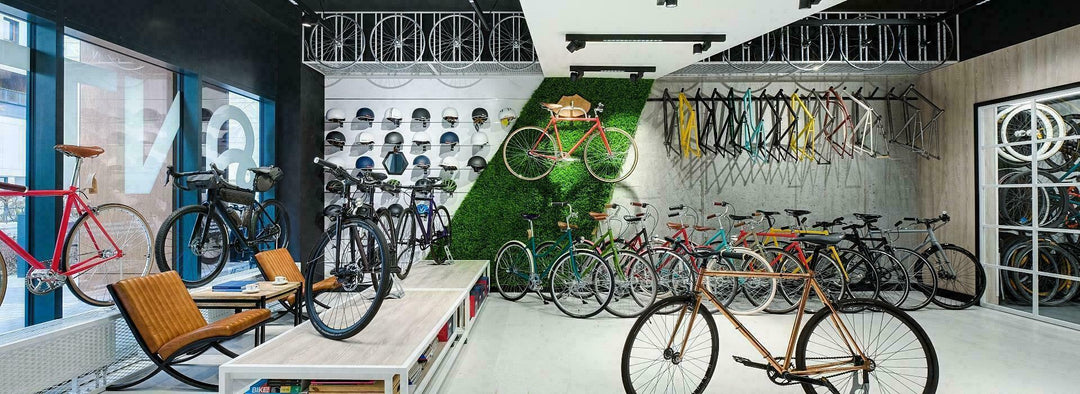
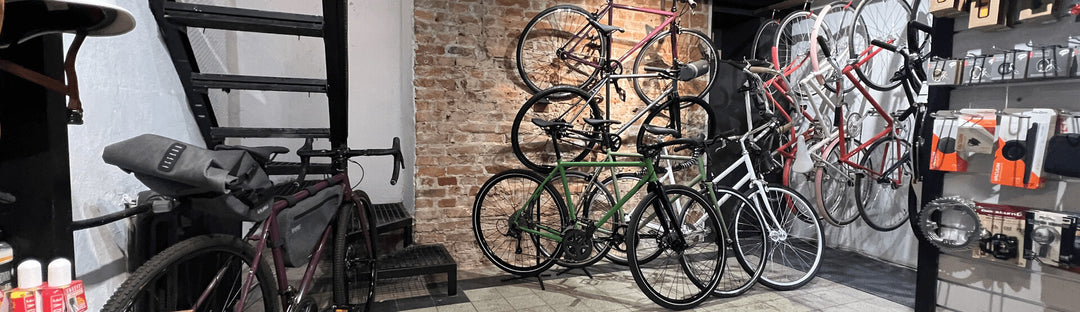
The frame is the main component of a bicycle, to which the remaining parts are attached. Aluminum, steel, titanium, and carbon fiber (carbon) are used to build frames. Aluminum frames are currently the most popular due to their attractive price and relatively low weight. Aluminum frames are produced in large quantities, often using fully automated production lines, allowing for unrivaled production costs compared to other materials. The biggest drawback of aluminum as a material in bicycle frames is its susceptibility to so-called "material fatigue," which can be accompanied by sudden frame cracking. Unfortunately, this can occur without any prior warning signs. Another disadvantage, particularly noticeable during long rides, is the material's poor vibration damping. Frames made of carbon composite (commonly called carbon) exhibit high stiffness yet low weight. On average, a frame made of this material can weigh around 1 kg. Unfortunately, carbon fiber has poor point stress resistance, which is why photos of cracked frames, even after minor accidents, often appear. The material from which all frames were once made, and which is now making a comeback, is steel. This material has excellent vibration damping properties and the highest fatigue strength of all frame materials. Its disadvantage is its higher specific gravity compared to other materials, but thanks to its fatigue strength, which is up to three times higher than that of 7005 aluminum, significantly smaller tube diameters can be used to produce frames with the same technical parameters. The best steel frame manufacturers (Columbus, Reynolds) now commonly use tube butting technology, which means the tube is thinner except for the most stressed joints. This tube is lighter and the frame doesn't lose its strength. Double- or triple-butting is used.
If you'd like to build your own one-of-a-kind bike, we'd love to hear from you. We'll help you choose the right size and components. If you'd like, we can also paint the frame any color you'd like – let us know :)