

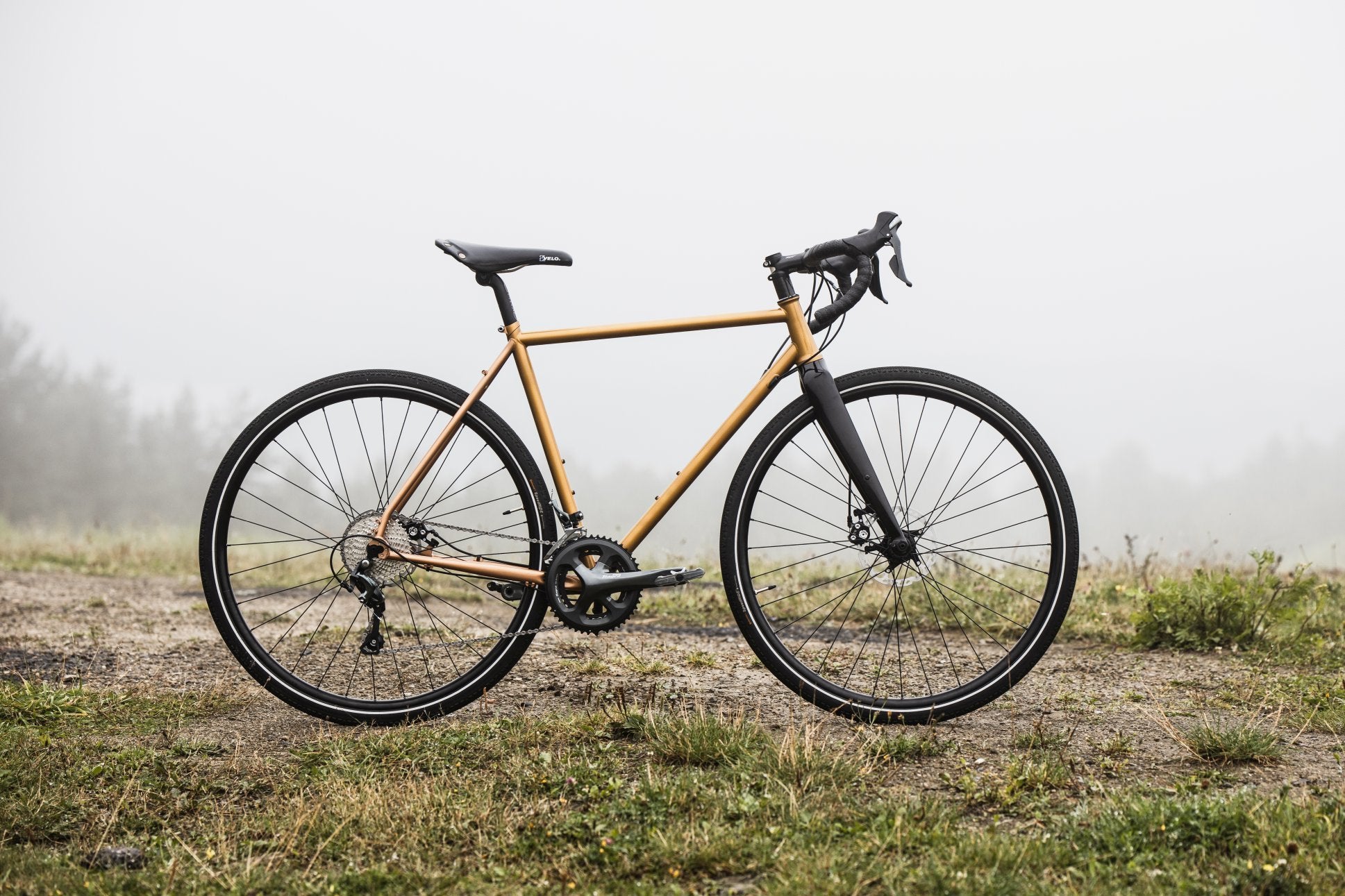
Are gravel bikes even divided into men's and women's bikes? Rarely. As with road bikes, though to a lesser extent, some brands create women's versions. Similarly, they most often differ primarily in color, although some have geometry tailored to women. Generally, it's not about choosing specific models, but knowing what to look for when buying based on body type and gender. Of course, this short post is based on generalizations – a men's gravel bike is an extremely broad term.
Pay attention to the frame

This is actually the most important thing. A men's gravel bike shouldn't be too short, even if you're looking for a more upright position. The top tube should be slightly longer than the seat tube. For bikes with a sloping frame (with a top tube that slopes backward), consider the distance between the head tube and the end of the seat tube. Why is this? Firstly, torso length, and secondly, broad shoulders (compared to the average female build), which require more room to work and a comfortable position. Of course, choosing the right size is crucial. You don't want to jump off the saddle to hang on the top tube and change positions in the choir, do you?
Men's gravel bike is also a matter of weight
But not the bike itself, but the rider. If you're more specific, pay attention to the frame weight limit. Many manufacturers specify a maximum around 110-120 kg. These are usually conservative statements, but a cracked frame is never pleasant, especially during a more aggressive ride. And it does happen. If the information isn't available on the website, you can easily obtain it by contacting the manufacturer. The same applies to wheels – they're much more likely to fail, even with riders weighing around 100 kg, and their durability is never specified. Here, you usually have to rely on the seller's experience. Wheels on cheaper models (up to 5,000-6,000 kg) can certainly be problematic if you weigh over 100 kg, and you'll need to consider ordering suitable ones.
Crank length and bracket dimensions
This is especially important when manufacturers are fitting everything available to bikes. So, be careful not to miss a trick, especially when it comes to cranksets. A size 59 men's gravel bike with a 165mm crankset is (almost always) a bad idea, and buying a suitable replacement can be expensive. Long cranksets are sometimes installed by default, even on the smallest models, and this is unlikely to be good for your knees.

The stem, seatpost, and handlebars are easier to replace, but it's still a good idea to check them before buying. Handlebars, in particular, are not always obvious. It's worth opting for wider versions over 44 cm. Straight-handlebar models are easier because they can always be trimmed.
A men's gravel bike doesn't have to be for a guy
I'll emphasize this again – there's no point in rigidly adhering to gender divisions, especially in this segment. Men's gravel bikes are the most frequently chosen type of gravel bike by women for the simple reason that everything I've written about is really just a matter of fitment. It's best to try on several models with an experienced salesperson and adjust them to your individual build and preferences.


Leave a comment