

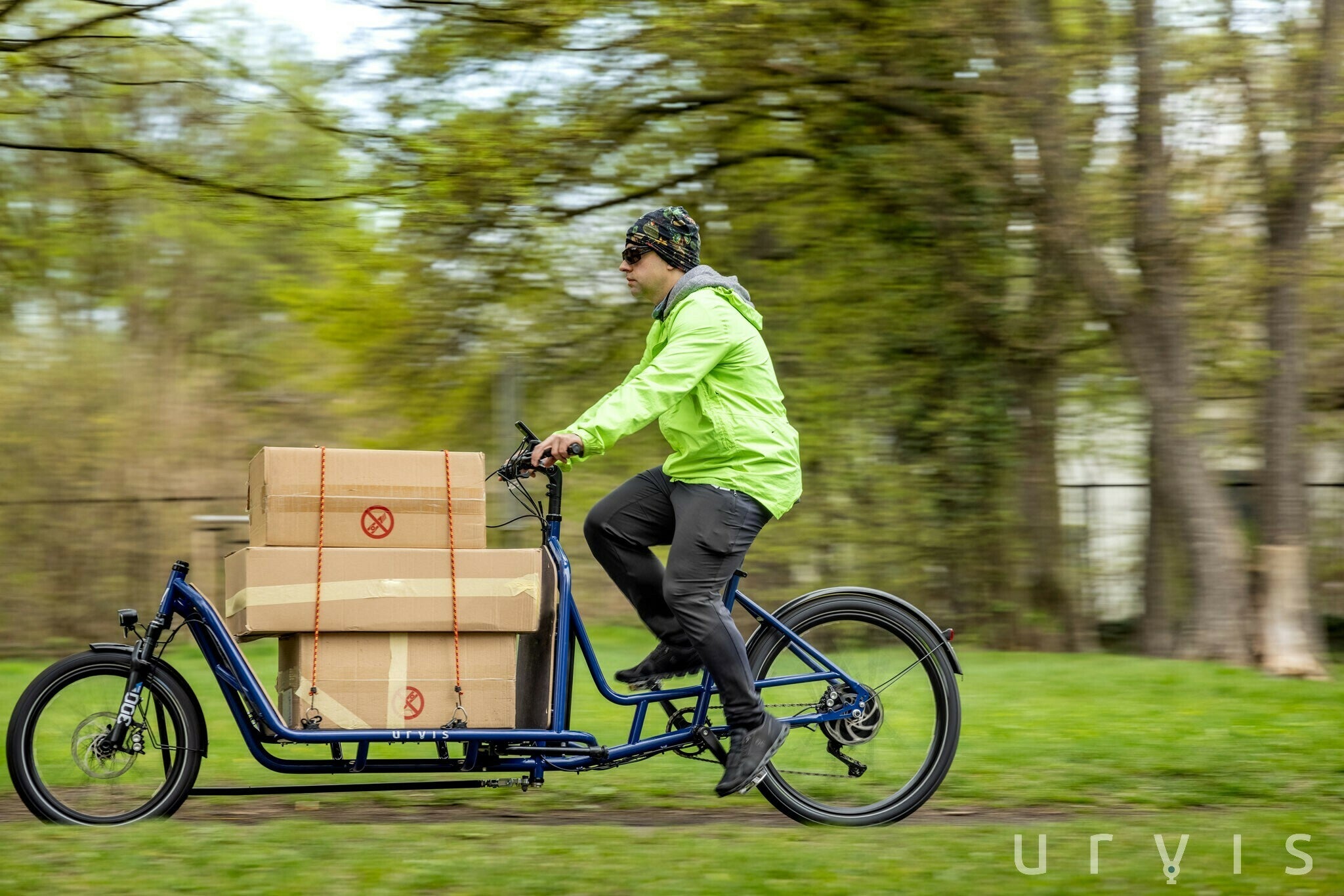
In the mythical West, they're already a common sight in many cities. Here, they're slowly starting to appear, though more often as child carriers than as transportation tools for businesses. It turns out, however, that such an investment is quite profitable (a topic for a separate article), but the sheer variety can be overwhelming. There's undoubtedly something for everyone, but it's worth knowing what you're looking for first. :) So today, I'll present the most popular types of cargo bikes, which I suspect won't require much in a few years.
Cargo bikes are nothing new. Various variations on this popular design have been around almost since the beginning of the bicycle's modern history, over a century ago. After all, a bicycle begs to be fitted with a rack or other platform. Then, with the popularization of cars, the concept faded into obscurity (especially in Europe and the United States), only to resurface in the last dozen or so years as a solution to traffic congestion and a sign of growing environmental awareness.
Three-wheeled cargo bikes
All rickshaws and models with two wheels at the front and a cargo bed between them. You can see them in many photos from pre-war Warsaw, and they are also extremely popular in many Asian and Latin American countries, such as Mexico . Steering mechanisms vary, from turning the entire platform to complex suspension and steering gears. Their great advantage is stability at low speeds and easy stopping. Furthermore, a load capacity of 100-200 kg is definitely heavy. This makes them ideal for mini food trucks and rickshaws transporting passengers around the Old Town. The downsides? Their width prevents them from fitting on bike paths or maneuvering between cars. At higher speeds, stability can also be an issue. Therefore, they are not smart and fast alternatives to cars in the city, but rather a short-distance choice for low-traffic streets, pedestrian zones, or out-of-town travel.

Two-wheeled types of cargo bikes
Two-wheeled cargo bikes are the opposite of three-wheeled bikes in many ways. They don't like slow speeds, only gaining stability once they're up to speed. Furthermore, they're (relatively) agile and can use bike lanes, allowing for joyful traffic jams. For this reason, they're often chosen by small businesses operating locally in city centers and by couriers. They're simply much more efficient than cars and easier to park. I'll discuss the three most popular types of two-wheeled cargo bikes, but don't be surprised if you encounter models that don't quite fit the bill. The field is wide, and the market is full of all sorts of inventions and hybrids. And that's great, because they're much more interesting than the somewhat stagnant, traditional designs of regular bikes.
Long John
This is the most popular type of cargo bike in our part of the world. The cargo box is placed in front of the handlebars, and the front wheel is positioned far forward. The bike is often over 2.5 meters long, so riding takes some getting used to, but fortunately, it's quick. Steering is via cables or bars. The structure is usually a simple box, platform, or passenger stand. A significant advantage is that you can keep an eye on the load, especially when that load is a child. URVIS, a brand related to Antymateria, produces such cargo bikes . We also share steel frames :)

Longtail
If not in the back, then in the front. These types of cargo bikes (as they're a very diverse group) have cargo space in the rear. An undeniable advantage is the traditional steering system, which translates into a simpler design. The ride is also very similar to regular bikes, just remember to keep the tail light. My favorites are the models with two child seats – you can transport two kids while optimally utilizing the space. You can also get special conversion kits for converting a regular bike into a Dachshund. It's relatively inexpensive, but I think I'd prefer a simple trailer to that kind of hassle.

Cycle truck
A compromise solution that, surprisingly, makes a lot of sense. The platform above the front wheel, permanently attached to the frame, outperforms any rack, while the wheel beneath it retains traditional steering. Furthermore, the whole thing is only slightly longer than traditional two-wheelers. This bike may not be the prettiest, but it's highly practical – it can fit into an elevator and an apartment, something that's rarely possible with a full-size cargo bike. It's also much lighter. However, it's not suitable for transporting bulky items like car tires or furniture.

All types of cargo bikes are great
As I mentioned earlier, the diversity of designs is truly astonishing. Even Dutch bikes with welded-on racks are sometimes considered cargo bikes, and there's no shortage of special designs or more or less impressive homemade bikes. Finally, it's worth noting that all types of cargo bikes have recently been gaining popularity thanks to... electrification. Increasingly better batteries and smooth-running motors allow for carrying a significant load with an effort similar to that of a regular bike. At the same time, such a vehicle remains cheaper to buy and maintain than a delivery van. We definitely like these electric bikes !


Leave a comment