


Working while on vacation is undoubtedly a crime. However, sometimes you can combine business with pleasure without additional expense or loss of dignity. For example, if your work aligns with your interests (which I wish for everyone). And so, while relaxing for three weeks in Mexico, I was delighted to photograph the local bicycles – most of them ugly and tacky to a degree almost unheard of here. And then I thought, bicycles in Mexico would make a great topic for an article. Rest assured – I immediately put that thought aside and only started writing after returning. And there's plenty to write about and show.
Bicycles in Mexico, so where?
Let's remember that Mexico has a surface area of almost two million square kilometers and a population of over one hundred and twenty-four million. A three-week vacation in such a vast and diverse country, however intense, is only a glimpse of its culture. I traveled mainly through the states of Yucatán, Quintana Roo, Chiapas, and Campeche. There were countless differences, but when it came to bikes, my impressions were very similar. Therefore, the term "bicycles in Mexico" is a generalization, but I think it's justified.
Very market-oriented
Bikes in Mexico are nothing special. During my stay, I saw only one bike I would consider "decent" (a Trek mountain bike from an "exclusive" rental company) and one well-maintained bike that would be considered lower-midrange here (a well-known brand with Acera-class components). Over there, it stood out so much that my non-cycling friends started asking me if it was anything special. So what does a typical Mexican bike look like? Two types predominate. The first is a steel MTB straight from the 1990s. Absolutely stripped of all its components and converted into a single-speed coaster. The rim brakes are removed or disconnected to avoid catching on the picturesquely undulating wheels. The second is something between a city bike and a cruiser. It's also a single-speed. Unlike those found here, it has almost no fenders, and often no mudguards. They're also distinguished by their enormous swallow-shaped handlebars, usually mounted at an extravagant angle. Combined with the saddle being lowered as far as possible, it results in an at least original position, which many Mexicans further enhance by placing their heels on the pedals and pointing their toes far outwards.

Old-school single-cylinder bikes with double top tubes, modeled after pre-war bikes, are still occasionally seen. Interestingly, their geometry, too, makes them incredibly sloppy.
What do all bikes in Mexico have in common?
Terrible quality and neglect. Many bikes have American-standard bottom brackets , which translates into enormous play. All have steel frames, sheet metal hubs, and flat rims. A-heads exist only as standard stems, mounted via an adapter onto traditional headsets. Clamp-on cranks and sheet metal U-brakes on new bikes are nothing unusual. There's a simple explanation for these facts: price. I only managed to find one bike shop, but it looked quite representative. New bikes cost around 500-700 złoty there. That speaks for itself.


Absolutely all the chains are rusty. Almost all the wheels are crooked (the roads are full of potholes and potholes). The bikes are kept outdoors, exposing them to alternating downpours and blazing sun. As a result, they're all faded, the saddles and grips are cracked, and wherever there can be play, there is. Service only covers issues that prevent riding. Are your handlebars loose? No big deal, it'll just hang sadly down, and you'll be leaning on the stem. It happens. A bent fork and a warped frame aren't cause for concern either. Or maybe it's simply a matter of budget?
The reasons for this state of affairs
Bicycles in Mexico are primarily the cheapest form of personal transportation, and they're kept outdoors in a climate where corrosion progresses rapidly. The rainy season, combined with sea spray (in coastal regions), are unforgiving. No one will invest in something that will eventually die, joining the ubiquitous and picturesque "pierdolnik Polski" (Polish Pierdolnik with Krajzega) in its wake. By the way, if you think the "pierdolnik polski" (Polish Pierdolnik with Krajzega) is unrivaled, you're underestimating the Mexicans. They've mastered the art of scattering objects around the yard. On the other hand, you have to give them credit – bicycles only end up there when they're literally unfit for riding. As long as the pedals are powering the wheels, the service continues, and consumerism takes a back seat to frugality, or, to put it mildly, poverty.

Long live cargo! Bicycles in Mexico are often a work tool.
Cycling generally seems to be perceived as something to get out of rather than to strive for, so bicycles aren't a very popular means of transportation. There's an exception, however – cargo bikes are seen almost everywhere. Almost all of them are the same model: three wheels, a wide tube instead of handlebars, a reinforced basket at the front, one gear, and a coaster brake. They're equally popular in the mountains – braking downhill with one fully loaded must be an exciting experience. On climbs, owners simply push them. But what can you carry with them? Everything! Garbage, clothes, family, water jugs, car parts. And finally, food. Because bicycles in Mexico are primarily food trucks. And they offer more than just sweets, fruit, juices, cigarettes, and lollipops (the latter two are an extremely popular combination). The basket houses a full-fledged kitchen, allowing you to cook corn, fry tacos, make burgers, and generally contribute to the vast ranks of Mexican street food workers.

The capacity of Mexican cargo trucks seems limitless, but after a certain (difficult to define) threshold, they transform into push carts without a drive. Further additions of goods or equipment transform them into stationary stands, tethered to chains.

Tuning!
Mexicans love tuning. Many cars, especially taxis, are adorned with large spoilers and LED lights, and colorful brake drums are a must. Bicycles are no exception. Without exception, all bikes are fitted with huge, bench-style seats. The aforementioned rakishly angled handlebars are often included. Baskets are also a premium. If a bike is completely covered in rust instead of paint, it should be spray-painted, but it's not worth removing the wheels or other parts.

But the best part is the pegs. Yes, rear axle extensions, straight from BMX bikes, are a very popular accessory on all types of bikes. Anyone who had a friend with a BMX as a child knows why. It's the simplest way to carry a passenger. And I'm not talking about children. Two workers returning from work like that is a perfectly normal sight. I respect that. Cargo bikes are required to be equipped with a horn, which must be blown every 10 seconds to attract the attention of passersby. Some even have roofs! However, my favorite modification was the machete holder under the frame. Unfortunately, I didn't dare ask the owner for permission to take a photo.

Cycling in Mexico
Finally, a few words about navigating Mexican roads. I'll add, from an observer's perspective. Forget about sidewalks. They're narrow, and the curbs are sometimes as high as 30-40 centimeters. I've seen two bike lanes – both in strictly touristy areas. That leaves the street, which to a European seems like chaos. Bicycles are tolerated, although you shouldn't expect them to give you the right of way. You should also be careful at intersections – a turning driver likely won't bother to give you room or signal. They'll simply turn. Most (not all!) cyclists move slowly and carefully, which seems to confirm my theory. After dark (and it falls quickly), few people use their lights. Add to that the lack of streetlights on many roads and the lack of headlights in many cars. YOLO. One more thing – even the few Lycra-clad, dedicated, and athletically driven cyclists I saw on the road and MTB (mostly older or low-end) were riding flatbeds. And they were taking on some serious climbs.

Finally, a positive note: instead of a bell, many cyclists whistle to warn pedestrians. I really like it. It's a shame I can't whistle.
Bicycles in Mexico reflect the situation in the country
Contrasts. These are primarily huge differences in material status. Cheap, beat-up bikes are the antithesis of the absurdly huge American SUVs with dark windows that park next to villas and haughtily squeeze through narrow streets, only to be stuck in traffic jams with Beetles. On the one hand, this seems to indicate contempt for the condition of the object and a pathetic technical culture, but on the other, it's about keeping the bikes alive until the very end.

I feel like bikes reflect the lifestyle of the locals, to some extent. They fulfill one purpose, and it's a shame to waste more time and effort on them. But most importantly, they help people with their jobs and enable them to run their own businesses in challenging conditions. And that means Mexico has the coolest bikes I've ever seen (though those American bottom brackets are a bit much). They're like all of Mexico – loud, a bit scary, and a damn sight to behold. I recommend them.
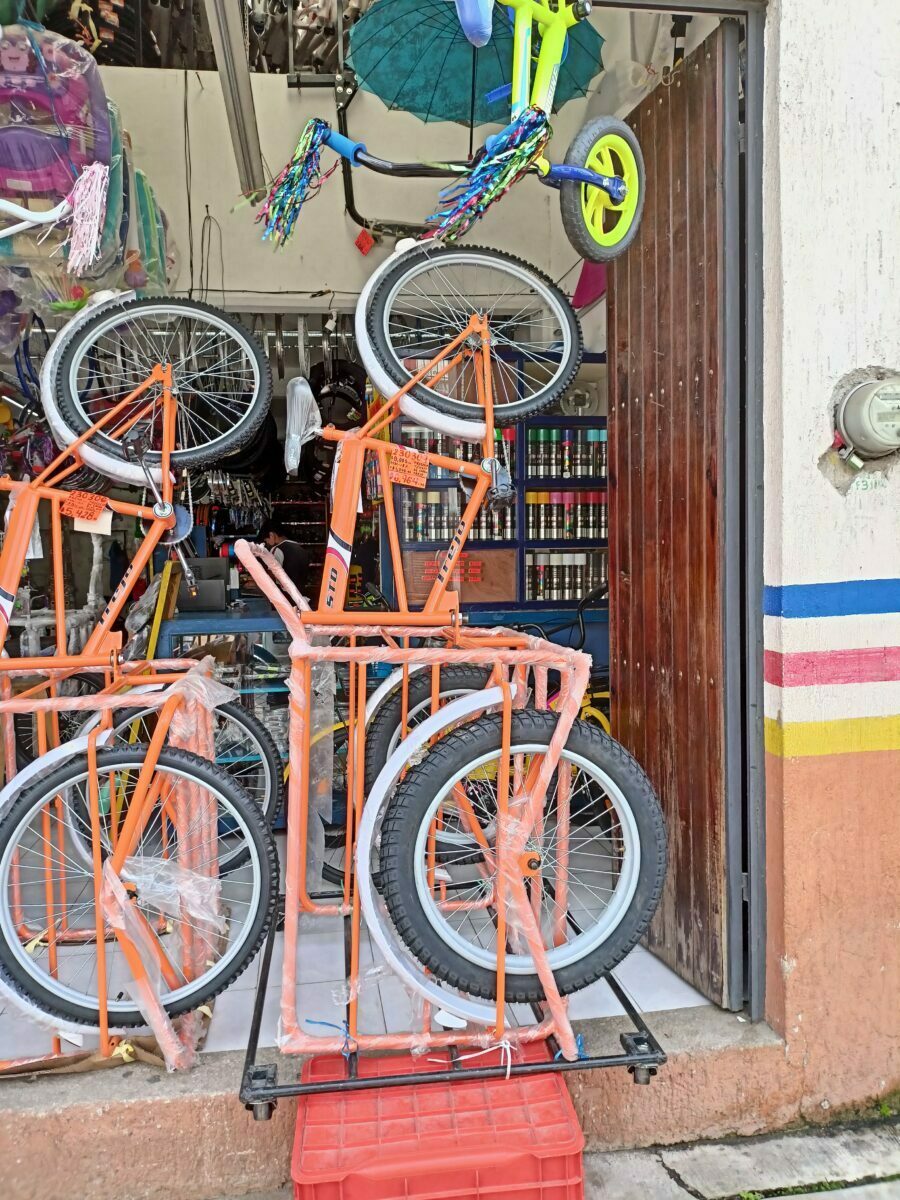
This is where business starts. 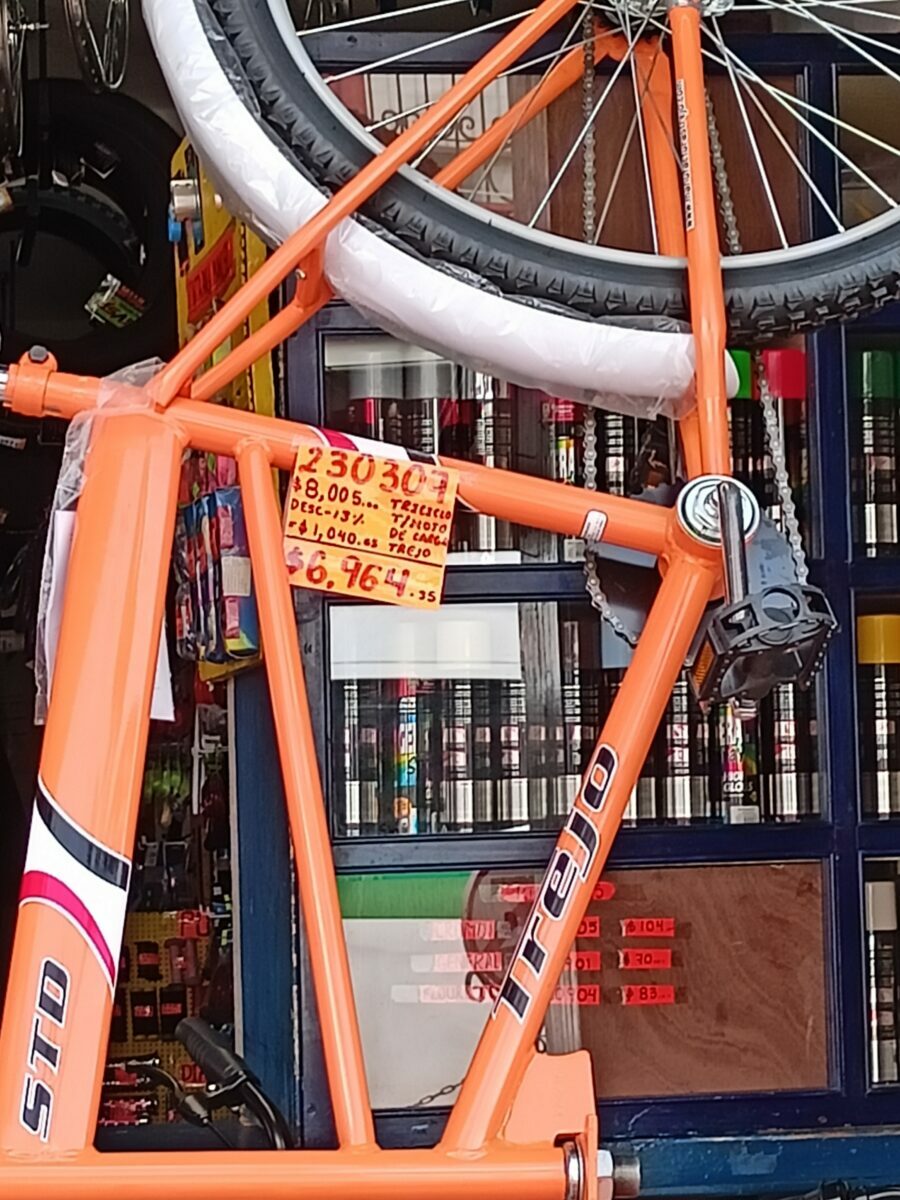
Opportunity 
Trust me, I'm Mexican. 
Crop failure. 
This one was in exceptionally good condition. 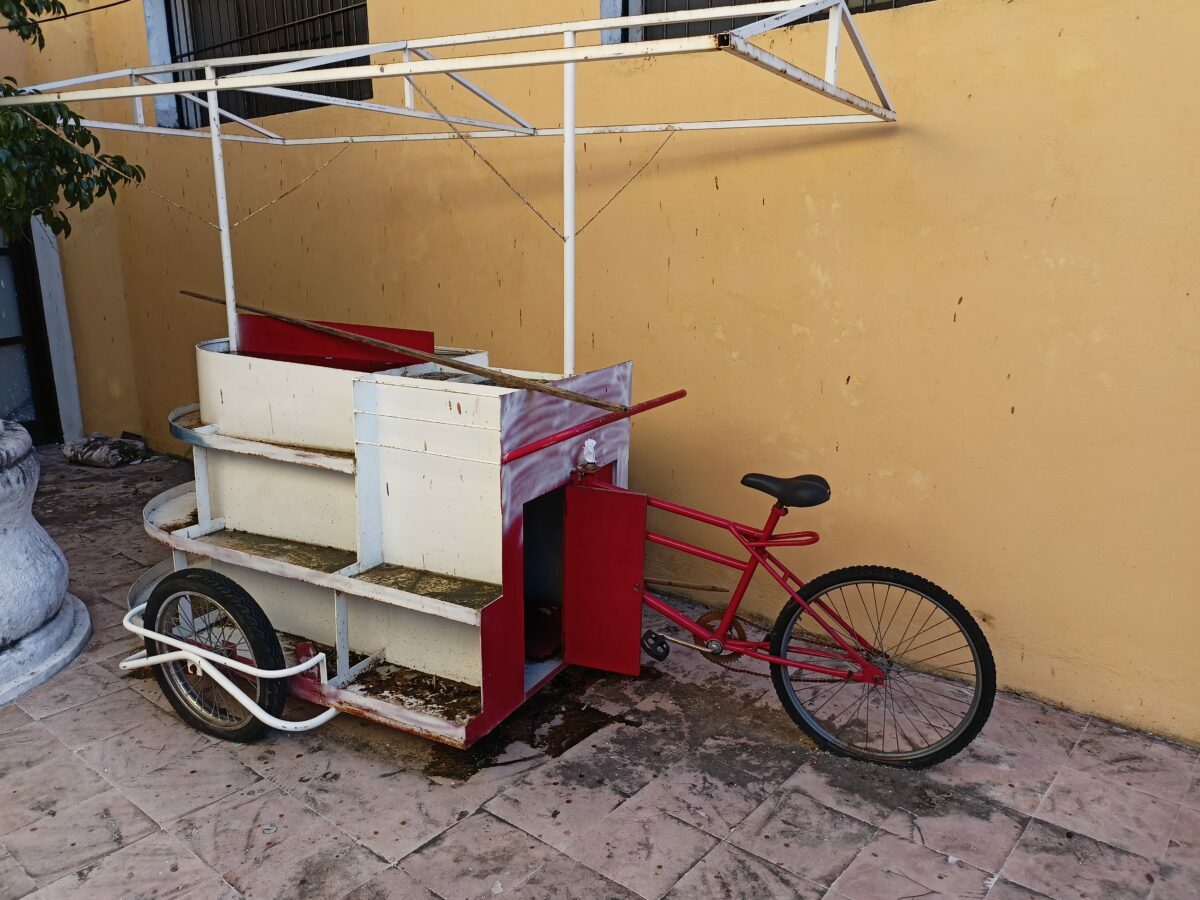
This one is no longer there, but what a development! 
Rainproof bike. 
One of the more interesting designs. It moved very briskly. Props! 
Cargo after tuning. 
The most beautifully corroded one I've ever seen. 
Ah! 
Compact protection.


Leave a comment