"Weaving rings is a true art."
I heard this clichéd and somewhat pompous phrase from an older colleague when I was just starting out as a bicycle mechanic. Over time, I've noticed that while mechanics are usually treated as a roughly homogeneous whole (completely wrong – you can work in a specialized workshop for years and not encounter many issues), there's a near-unanimous belief among mechanics that the "art of wheelbuilding" is something special and somewhat distinct. Braiding wheels is like a profession within a profession.
It's not that difficult!
That's partly true. A spoke length calculator,
a step-by-step guide , an inexpensive nipple wrench, and a little creativity are all you need to lace and true a wheel at home without any experience. I laced my first wheel this way and was really proud of myself. Interestingly, thanks to the rough rim, it was even relatively easy.

This was definitely not a light wheel.
So what's all the fuss about? No, it's not about the details at all. It's about experience and intuition. If I'd had to assemble a wheel with a light rim and butted spokes, the whole thing would have ended in a more or less spectacular failure. Wheel-braiding is precisely what we call a craft—it requires painstaking work and a wealth of experience. Here, the advice and knowledge we receive are just the beginning, gaining value only when combined with the slow process of "feeling" how individual components behave.
See how to center a wheel
The machine will do it better
Today, most entry-level and mid-range bikes are equipped with machine-laced wheels (not ours!). Their quality is undoubtedly inferior to that of an experienced mechanic. However, when it comes to high-quality system wheels, the situation is not so clear-cut. System wheels are designed as a single unit, so theoretically, their components work better together. Moreover, high-end machines lace them, often as well as or even better than humans. However, system wheels (at least the good ones) are laced using the best machines in the world.

Mavic Ksyrium - popular system wheels.
Does this mean the end of the art of wheel lacing by technicians? Not necessarily. Hand lacing allows, above all, the ability to select components to suit the user's weight and preferences, as well as precisely adjust spoke tension to suit their needs. For many people, the "magic" of handcrafted work itself is also significant.
In Pursuit of Perfection - Weaving Circles Without End
Every mechanic passionate about wheels strives for the impossible. The perfect wheel has no axial runout, is perfectly centered, and its spokes have uniform, optimal tension for a given rim. Due to the imperfections of all the parts that make up a wheel, this is impossible. What we call magic or art is the balance between these properties and imperfections. A truly experienced wheelbuilder is one who can create a wheel that is as straight and durable as possible, with spoke tension as close as possible. You have to know when to stop. Sensing that precise moment, when we are at the peak of both our material and our skill, is as important as patience and a steady hand. There's another aspect often overlooked – it's not only art, but above all, work. Yes, speed is also important; after all, not everyone wants to wait months for their dream wheels.

More about the tools you need in the next post.
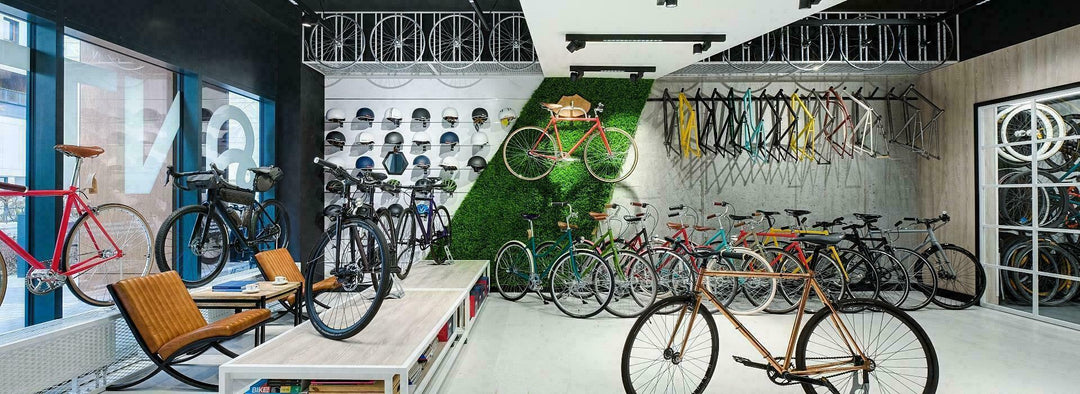
Why am I writing about all this? Antimatter isn't just a shop selling unique bicycles and a service center. It's about the idea of enjoying the bicycle and everything related to it. That's why we want to show that behind the seemingly simple mechanism of the bicycle lies a fascinating story. Lacing wheels may even have a somewhat mystical air, but it's primarily a concrete process. In my next post, I'll try to explain it from a technical and tool-based perspective.
You can find it here.
See you!


Leave a comment