


What's it like to cycle around Tel Aviv? After a short stay, it's hard to even begin writing a guidebook. Nevertheless, a few days of intense cycling allowed for some reflection. Israel isn't exactly a favorite holiday destination for Poles, but the number of tourists from our country is growing rapidly. Even in January, temperatures reached 20 degrees Celsius. But in just a few weeks, it will be not only warmer but also significantly drier (we were caught in a few rain showers and even a thunderstorm). If you're planning a trip in this direction, it's worth dedicating at least one day to exploring Tel Aviv by bike.

 While drivers are relatively calm, I recommend avoiding heavily trafficked routes – people drive fast here, and cyclists aren't treated with any particular respect. We've also cycled on sidewalks without incident, but I admit we haven't checked whether it's a serious offense.
 Electric bike and scooter users, on the other hand, pose a greater threat on the paths. I don't have any statistics at hand, but there are more electric vehicles in the city than I've ever seen even in wealthier European capitals. The weight and speed of such vehicles are real. When planning your journey around the city, it's also worth considering that it may not be particularly mountainous, but when driving from the sea, you'll still be climbing hills every time.


 Tel Aviv has a completely different character than Jerusalem. While you'll certainly encounter Orthodox Jews here (black robes, white shirts, sidelocks, beards, and hats, women in revealing dresses and, of course, wigs), including those on bicycles, it's above all an open, cosmopolitan city.
The area around the old port in Jaffa is also home to an Arab (but not exclusively) market, or "souk." Of course, it's primarily a tourist attraction these days, but you can still find not only souvenirs but also anything authentic. Hundreds of shops and stalls selling new and used clothing, handicrafts, antiques, and bric-a-brac. Plus, a plethora of restaurants and bars. In the evenings, some of the alleys are filled with tables and crowds of partygoers from around the world.
Tel Aviv has a completely different character than Jerusalem. While you'll certainly encounter Orthodox Jews here (black robes, white shirts, sidelocks, beards, and hats, women in revealing dresses and, of course, wigs), including those on bicycles, it's above all an open, cosmopolitan city.
The area around the old port in Jaffa is also home to an Arab (but not exclusively) market, or "souk." Of course, it's primarily a tourist attraction these days, but you can still find not only souvenirs but also anything authentic. Hundreds of shops and stalls selling new and used clothing, handicrafts, antiques, and bric-a-brac. Plus, a plethora of restaurants and bars. In the evenings, some of the alleys are filled with tables and crowds of partygoers from around the world.
 Food and cuisine in Israel are a topic for a separate post, less about cycling and more suited to a food blog. It's definitely a paradise for vegetarians. Our family experiences were either good or extraordinary (except perhaps for the food at the hotel itself). If you like hummus, falafel, or shakshuka, you'll find it on every corner. But more sophisticated cuisine is also always available. For those familiar with "Jewish" cuisine from Krakow's Kazimierz district, you can probably still find similar dishes in more traditional places with a larger Hasidic diaspora, but it's by no means a popular cuisine in Israel today. The dominant trend is trendy "fusion," combining European and Arabic dishes and flavors. In addition, of course, there are plenty of regional restaurants serving Italian, Greek, Indian, and other cuisines.


 We have gently traversed the path from satisfying the needs of the body to nourishing the soul. In this respect, the city offers, above all, the vast resources of the Tel Aviv Museum of Art. Modern Israel's history is less than a century old, yet the Jewish diaspora scattered around the world has long been collecting valuable works of art. It should come as no surprise, then, that no Polish art museum can boast a comparable collection—especially when it comes to early-20th-century painting. German Expressionism, Dutch De Stilj, Cubism, Impressionism and Post-Impressionism, Constructivism, and Surrealism—everything is available here, including works by Picasso, Van Gogh, Klimt, and Kandinsky. Furthermore, contemporary art, including paintings by Jackson Pollock and others, is also available. Even if you're not a huge art fan, this place is worth recommending!


Cycling around Tel Aviv?
A glance at the map is enough to confirm that while numerous bicycle paths are being built (currently over 100km), they do not (yet?) constitute a coherent network. This, however, does not prevent convenient travel around the city. Tel Aviv, or rather Tel Aviv-Yafo, is the largest urban center in Israel, and even a regional metropolis, home to the headquarters of major companies and institutions. Due to its location along the coast, it's easy to travel along a picturesque cycle path that runs practically alongside the beach (the north-south route is a dozen or so kilometers long). The northern end of the route marks the largest green space, HaYarkon-Park. Heading south will take you to the Arab Old City of Jaffa. If you want to venture deeper into the city, it's no problem – the distances here don't exceed a few kilometers. Besides designated paths (mostly paved), the routes sometimes run on sidewalks or (less frequently) on designated sections of roadway.
While drivers are relatively calm, I recommend avoiding heavily trafficked routes – people drive fast here, and cyclists aren't treated with any particular respect. We've also cycled on sidewalks without incident, but I admit we haven't checked whether it's a serious offense.
Electric bike and scooter users, on the other hand, pose a greater threat on the paths. I don't have any statistics at hand, but there are more electric vehicles in the city than I've ever seen even in wealthier European capitals. The weight and speed of such vehicles are real. When planning your journey around the city, it's also worth considering that it may not be particularly mountainous, but when driving from the sea, you'll still be climbing hills every time.
Transport to Tel Aviv – international and by bike
LOT, El Al, Sun d'Or (owned by El Al), Wizz Air, and Ryanair fly to Israel. Flights are offered not only from Warsaw and Krakow, but also from Katowice, Poznań, Gdańsk, Wrocław, and even Rzeszów. Commercial bike rentals are quite expensive (see below for a discussion of the bicycle market), so we're left with municipal rental companies. Sturdy green bikes with the "Tel-o-Fun" logo are a common sight around town. The system was introduced in 2011 and offers approximately 150 rental stations spaced no more than 500 meters apart. The first 30 minutes are free, but you have to pay a daily fee of 17 shekels (converting prices to Polish zloty, at least at the current exchange rate, is the easiest in the world, as 1 shekel is roughly equivalent to 1 złoty). Conveniently, you can rent up to four bikes with a single credit card.
Routes, attractions, trip ideas - for starters
People traveling from Poland to Israel are primarily drawn to the biblical, ancient past. Jerusalem, Nazareth, Bethlehem – even those with only a passing religious aspirations want to experience places so deeply connected to our Christian heritage. However, for such tourists, Tel Aviv may seem like an uninteresting stopover. The city was established in the 20th century and can't compete with Jerusalem in terms of tourist attractions. By contrast, Jerusalem is practically impossible to cycle through. Its hilly location requires significant climbs (and sometimes significant detours), and the heavy traffic (there are practically no paths) further discourages. Furthermore, many places are practically impossible to access (the entire Old City).
Tel Aviv has a completely different character than Jerusalem. While you'll certainly encounter Orthodox Jews here (black robes, white shirts, sidelocks, beards, and hats, women in revealing dresses and, of course, wigs), including those on bicycles, it's above all an open, cosmopolitan city.
The area around the old port in Jaffa is also home to an Arab (but not exclusively) market, or "souk." Of course, it's primarily a tourist attraction these days, but you can still find not only souvenirs but also anything authentic. Hundreds of shops and stalls selling new and used clothing, handicrafts, antiques, and bric-a-brac. Plus, a plethora of restaurants and bars. In the evenings, some of the alleys are filled with tables and crowds of partygoers from around the world.
Food and cuisine in Israel are a topic for a separate post, less about cycling and more suited to a food blog. It's definitely a paradise for vegetarians. Our family experiences were either good or extraordinary (except perhaps for the food at the hotel itself). If you like hummus, falafel, or shakshuka, you'll find it on every corner. But more sophisticated cuisine is also always available. For those familiar with "Jewish" cuisine from Krakow's Kazimierz district, you can probably still find similar dishes in more traditional places with a larger Hasidic diaspora, but it's by no means a popular cuisine in Israel today. The dominant trend is trendy "fusion," combining European and Arabic dishes and flavors. In addition, of course, there are plenty of regional restaurants serving Italian, Greek, Indian, and other cuisines.
Where to hide from the rain?
A local attraction is the area around Dizengoff Street, where not only fashionable boutiques are clustered, but above all, multi-story tenement buildings with gentle shapes and bright facades dominate. Classically curved balconies and porthole-like windows—such modernist accents can be found in Warsaw's Saska Kępa district, Old Mokotów, or the older parts of Żoliborz. This is the architecture that German Jews brought to their hearts from the Bauhaus school, when the Nazis deemed it too cosmopolitan and/or too nationalistic. You can visit a small center dedicated to Bauhaus, where you can admire examples of the meticulous renovation of some of the nearly 100-year-old buildings.
We have gently traversed the path from satisfying the needs of the body to nourishing the soul. In this respect, the city offers, above all, the vast resources of the Tel Aviv Museum of Art. Modern Israel's history is less than a century old, yet the Jewish diaspora scattered around the world has long been collecting valuable works of art. It should come as no surprise, then, that no Polish art museum can boast a comparable collection—especially when it comes to early-20th-century painting. German Expressionism, Dutch De Stilj, Cubism, Impressionism and Post-Impressionism, Constructivism, and Surrealism—everything is available here, including works by Picasso, Van Gogh, Klimt, and Kandinsky. Furthermore, contemporary art, including paintings by Jackson Pollock and others, is also available. Even if you're not a huge art fan, this place is worth recommending!
Fernard Leger, "The Team Resting" 1943, Tel Aviv Museum of Art
Cool bike spots in Tel Aviv
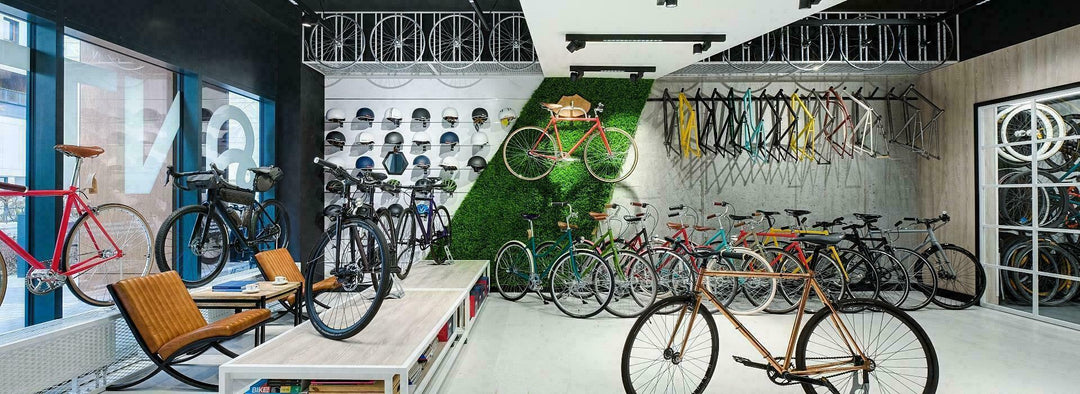
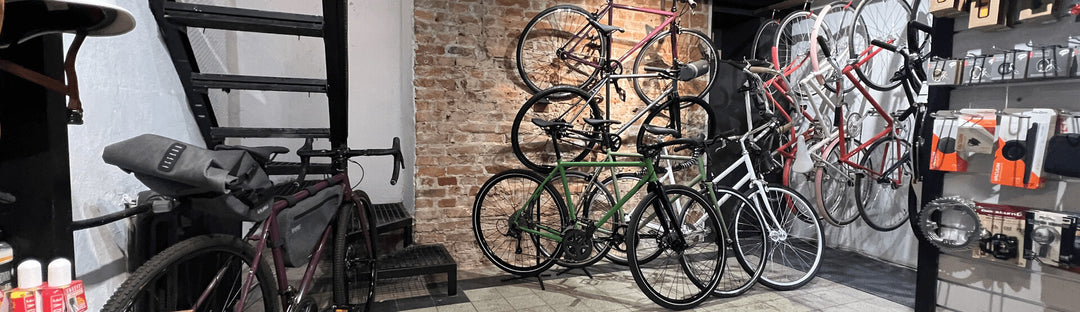
The number of bicycle shops and repair shops corresponds to the city's size. Thanks to Google, I counted just over 20 places selling bicycles and/or servicing, which isn't an exceptionally large number for a city of half a million people. However, I assume that, as elsewhere, the internet is playing an increasingly important role, along with sports and less specialized shops. Wherever I travel, I can't resist, and despite my family's protests, I sometimes wander into such places. The general impression is that the selection of bikes (apart from the point below), parts, accessories, etc., isn't much different from what we have in Poland. I don't know how much conclusions can be drawn from three short meetings, but the level of openness and friendliness of the owners and operators of these businesses was much better than in other places I've visited in Europe. A widespread (and usually excellent) knowledge of English helps greatly. Below are some photos from what I consider to be the most interesting places: One Bike Studio , or...the equivalent of Antimatter in Israel O-Fun... or an instructive lesson on how to use a window blind drive Bike Cfe. ..or coffee, but above all, bicycle frames made of..magnesium!


..rower 2szt – 1 doba – 400Nis-abraham hostel – 18.09.2018….W tym roku we wrześniu spróbujemy rower miejski…pozdrawiam Maciej Pawłowski
Leave a comment