

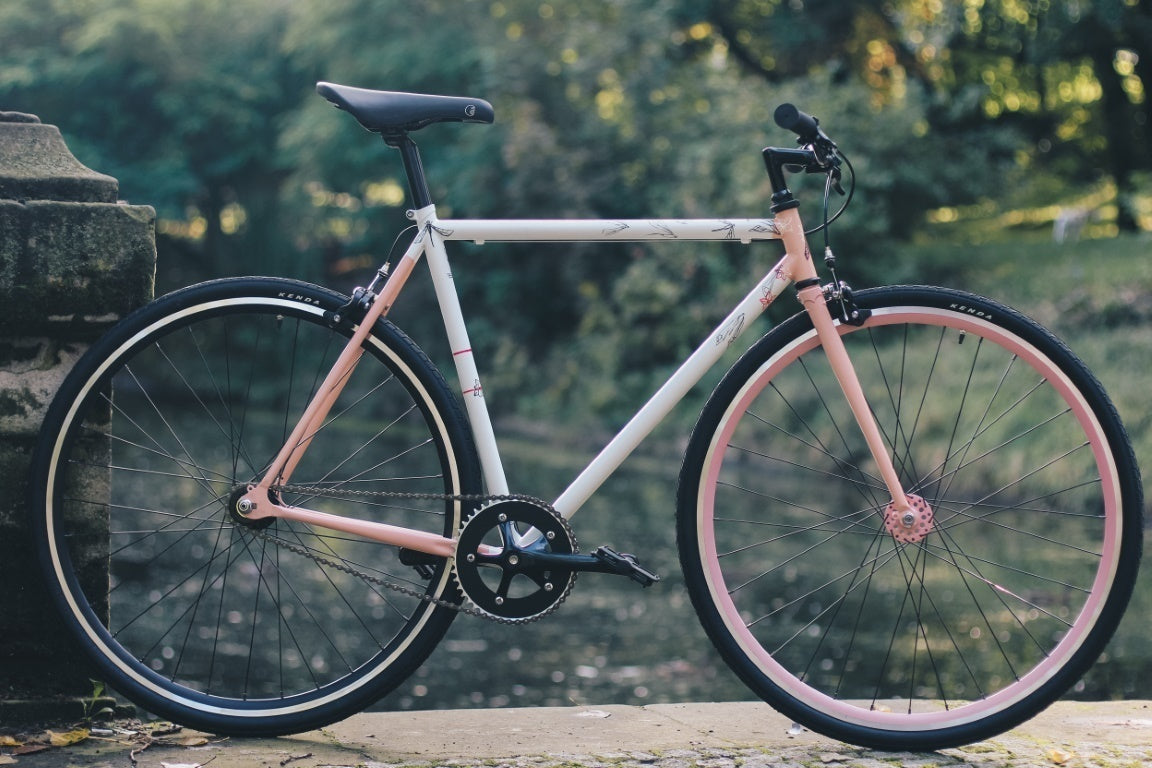
This topic may seem trivial. How do you paint a bike to make it look good? Contrary to appearances, you might encounter some difficult choices. And I'm not talking about colors, but about the method of applying them. Is it better to use powder or wet paint? Or maybe roll up your sleeves and, instead of taking it to a paint shop, handle the painting over a beer in the garage? I'll outline the pros and cons of each solution. However, let's start with what they all have in common.
How to prepare a bike for painting?
It needs to be disassembled. Painting a bike without disassembling it is a terrible idea – too many moving and complex parts are exposed. Effective masking is more work and will almost certainly result in accidental damage. If you want to do it yourself, you'll need quite a few tools ( here's a separate article on this topic ) and at least some basic experience. If you're not up for it, any reputable bike shop will prepare your bike for painting; most also have proven specialists in this field. It's important to protect all threads and fitting points (e.g., headset). This can be done with screws or... grease. The latter is especially effective on the head tube and bottom bracket shell.

If you're taking your frame to a paint shop, the specialists will take care of the rest. If you're planning to tackle it yourself, you'll need to prepare the surface. It's best to sandblast the entire thing or at least roughen it with 80-200 grit sandpaper to remove any imperfections. Then, thoroughly degrease it with mineral spirits and you're good to go.
How to paint other parts of a bike?
By analogy, it rarely makes sense. Definitely skip the seatpost – a coated one won't want to retract into the seat tube. As for the drivetrain, ignore all working components like axles and chainrings. Derailleurs, levers, and shifters – they're easy to impair, as the individual moving parts are very close together. It's relatively easy to paint cranksets, but remember that the paint will quickly peel off from shoes and pants. How to paint bicycle wheels? It's best to disassemble them, but you have to be aware that reassembling them won't be easy. With a little persistence, you can paint the rims, masking the spokes and brake discs (I used to be one of those ambitious kids, at least outside of school). Be warned, though, it's a lot of work, the results are average, and the spray paint is easily scratched when truing.
Professional bicycle painting using the spray method
This is the most popular method used by most major manufacturers. Multi-layer paint applied wet with a spray gun allows for intense colors and a smooth, glossy finish. Additionally, using tapes and stencils, you can create paintings with lettering, patterns, multiple colors, and more. Stickers can be applied to colored paint and secured with clear varnish. However, you should be aware that the paint is relatively resistant to scratches and chips. Prices for simple, single-color painting range from 300 to 700 PLN. A good professional is valuable. And if you have more unique ideas, you can turn to airbrush specialists.

Powder coating of a bicycle
This is a method we almost always use on our bikes . The frame is first coated with an electrostatically adhesive powder, then baked in an oven, where the powder transforms into a durable coating. This type of paint isn't as smooth as spray paint, but it's highly durable. You can also choose from a vast RAL palette and many specialty colors. Our painter is a true artist – he creates and blends extraordinary colors, including chameleons, multi-layer candy paints, and glitter finishes. He can also mask patterns. A basic bike painting service costs 250 PLN (without disassembly and assembly, of course – this service costs 350 PLN with us). You can easily do it cheaper at industrial paint shops, but the result will be much more clunky, albeit more durable. It will also tend to fade in the sun.

This method has one limitation worth mentioning: the oven temperature doesn't allow for the use of any material other than metal. Painting a carbon fiber bike is only possible using traditional paint application.
Homemade bicycle spray painting
Let's move on to home methods. If you're a steady hand, you can set up a paint shop at home. A basement or garage will work, as long as it's not damp. After cleaning and preparing the frame, hang it up so you can access all sides. Equip yourself with a mask, some old clothes, and you're ready to start painting your bike! First, you'll need a primer. Apply the paint in thin, smooth layers, pressing the sprayer all the way down. It's a good idea to start slightly in front of the frame and finish slightly behind. The risk of paint "spitting" is greatest when the button is pressed. Wait 10-15 minutes between coats. Primer usually requires 2-3 coats. Wait about an hour.
Next, apply the color. Stick to the rule of thumb: it's better to apply too thinly than too thick – this will prevent streaking. Full coverage usually requires about three coats, while a "safe" finish requires a total of four or five. If you can afford it, give the polish 24 hours to cure. If you plan to play with masking, even 72. For multi-colored paint jobs, start with the lightest colors. This is also the time to apply decals.
Finally, we apply a clear coat to protect the entire surface and add shine. The first coat is a "mist"—a very thin layer. Its name suggests it. Then, as usual, apply 2-3 coats. Finally, we apply a solid "wet" coat, thicker than the previous ones. Just be careful not to overdo it—no drips. Let the paint harden for a few days.
Less ambitious people stop at this stage. However, I recommend equipping yourself with soft cloths and polishing compounds of at least two grits. Just be careful not to over-polish! Believe me, the result will be worth the extra hours of work.
Painting a bicycle with a brush
Brushing the entire frame like you're painting a communist-era apartment is a bad idea – the surface will be uneven and will quickly start to flake off. However, if you have artistic flair (or friends who can paint), the results can be spectacular. Before you start creating your masterpiece, however, make sure it doesn't go to waste. You'll need to spray primer and a base color. This base is applied with a brush. Once your work has dried and hardened, spray on a clear varnish to protect everything.

As you can see, there are many ways to achieve a truly unique bike. Surely it's worth the money and effort?


Ja swoją zabytkową kolarkę wymalowałem chałupniczo, około tygodnia czasu w pokoju :)
Tak jak piszesz, papier ścierny, podkład, kolor, bezbarwny.
Jedynie kolor był trudny i spowodował z bliska widoczne paskudztwa to jednak całościowo efekt jest świetny :)
Kolor to farba odblaskowa do malowania znaków na dowolnych powierzchniach :D i ma bardzo niską trwałość co wymaga więcej warstw bezbarwnego żeby jakoś to się trzymało.
Hej, najlepiej zgłoś się z pacjentem osobiście. Należy się jednak spodziewać ceny czterocyfrowej, jeśli chcesz zrobić to porządnie.
Witam. Chciałbym na jesień pomalować ramę mojego starego Treka. Rama i widelec jest aluminiowy. Chciałbym pomalować go w oryginalne kolory teamowe, tak jak obecne modele Emonda czerwono-czarne. Ile kosztuje taka usługa?
Leave a comment