


How to create the perfect city bike?
Frame, Drivetrain, and Other Decisions That Matter
What makes a city bike really work?
A city bike is a tool that should fit into your life—not the other way around. It should be fast, but not restless. Stable, but not sluggish. Comfortable for short trips, yet ready for a longer city tour. And above all: it should work without fuss—every day, year-round, whether you're going for a coffee, shopping, or just getting around.
But a "city bike" isn't a ready-made recipe. It's more of a set of conscious choices: frame, geometry, drivetrain, brakes, and accessories. In this article, we'll go over the most important ones – from the perspective of comfort, durability, and a ride that's enjoyable, not frustrating.

Frame: aluminum or Cro-Mo steel?
This is where the whole philosophy begins. The frame is the heart of the bike—how it handles, how much it weighs, whether it transmits vibrations or softens them like a well-brewed tea. And let's be clear right away: aluminum is everywhere. Light, stiff, and cheap to produce. In 90% of cases, you get aluminum in supermarket "urban bikes" and do-it-all bikes. Except... exactly: it's stiff. Very stiff. You can feel every checkered surface, every curb, every patch of asphalt.
And now Cro-Mo—chromium-molybdenum steel. A material that doesn't shine in Excel, but wins in riding. Steel isn't the lightest, but it has soul. It absorbs shock naturally, dampens micro-vibrations, adds smoothness and... character. A steel bike rides like a well-tuned instrument—soft, confident, with a "flow" that can't be expressed in watts.
If comfort and style are your priorities, a Cro-Mo frame is a better choice. Especially in the city, where comfort and control are key, not racing against a bus. Besides, steel doesn't age. It can be brazed, repaired, and repainted. It's not just a bike—it's a design built to last.
See our frames - Anti frameset

What about geometry?
Regardless of the material, geometry is the other half of the puzzle. For city riding, you don't need a time trial position or a hump for climbing. Look for a bike with an upright stance, an open frame (if you like easy mounting), a short stem, and a not-too-long tail. Such a bike maneuvers well in tight streets, and you don't feel like you're spinning at traffic lights.
Our philosophy is that a good city bike is one that doesn't force you to compromise between style, comfort and handling.

Drivetrain – How many gears is “just right”?
City riding doesn't need 30 gears. Seriously. In most cases, a single-speed drivetrain will suffice, and if you want a bit of flexibility, a Nexus 7 or 8 planetary hub, which we wrote about in more detail here. Simple, reliable, no fiddling with derailleurs or cables.
We're not orthodox, but from experience: the fewer parts protruding from the frame, the less it breaks, rusts, or falls off. A closed-hub drivetrain means no dirty chains, no rear derailleur cages clattering on the curb. Perfect for year-round riding, even in winter.
And if you want more control and are the "I like to know what's going on with my drivetrain" type, a classic 1x9 or 1x11 external drivetrain will work just fine. But only if you're willing to wipe and lube it occasionally.
See also our text about women's bikes - Hub derailleur (Shimano Alfine/Nexus) - a maintenance-free drivetrain for your lightweight women's bike

Wheels, brakes, accessories – urban details that make a difference
A well-configured city bike usually rides on 28-inch (700C) wheels, with a tire around 35–42 mm. This setup provides speed but also shock absorption. The more sidewalks and potholes, the wider the tire, the better. Brakes? We recommend V-brakes or mechanical discs. Avoid the cheapest hydraulic brakes—if they fail, it'll be in the middle of December. And you can fix V-brakes with a rubber band and cable tie.
And the accessories? This is where you can really get creative. A basket, a rack, mudguards, a kickstand, a belt instead of a chain, a retro bell, USB lights. These aren't "must haves," they're "can haves if you want." For some, a rack for carrying a child seat will be key. For others, a stylish bag attached to the frame. The possibilities are endless, and it's good that they exist.

Okay, so where can I find a bike like this?
We'll brag a bit here—because we build these bikes from the ground up. Cro-Mo frames, custom geometry, custom drivetrain, wheels assembled on-site, and a dream paint job. Whether you want a classic ladies' bike with a strap or a men's commuter with a rack—we'll build it for you. Not from a catalog, but in real life: with you, for you, in Warsaw.
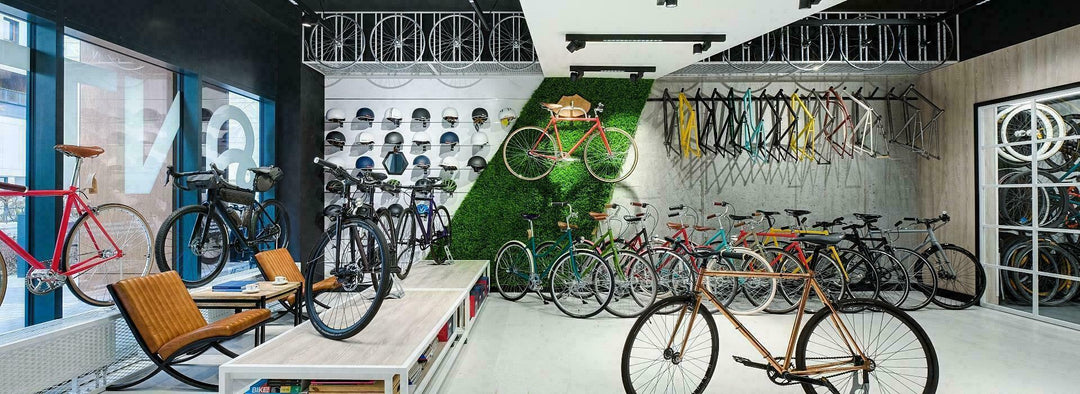
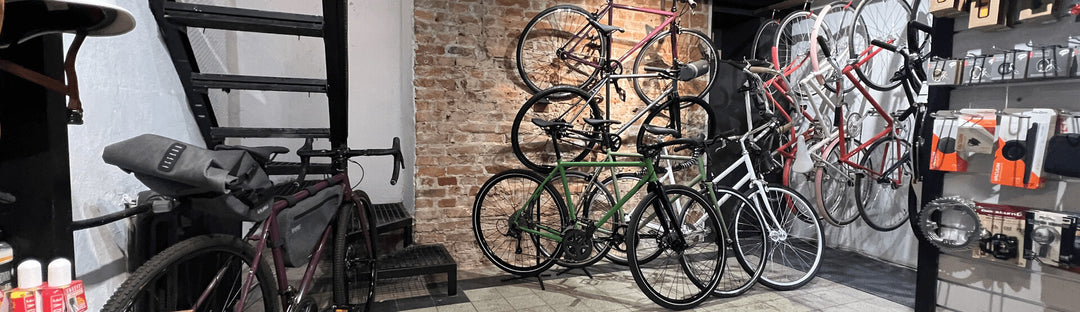
Stop by our office at Skolimowska 6 (Śródmieście) or Zdziechowskiego 7 (Mokotów). You can see our finished bikes, chat about steel frames, try on geometry. Or just grab a coffee and think things over. Because a good bike starts with a conversation.

Summary (for those scrolling)
- Frame: Cro-Mo - more comfortable, more durable, more "urban" in character than aluminum
- Drivetrain: The simpler the better – single speed, Nexus/Alfine or 1x drivetrain
- Brakes and wheels: solid V-brakes / mechanical discs, 28" wheels with city tires
- Extras: options to suit your needs, from basket to timing belt


Leave a comment