


The choice of gravel drivetrains today is much wider than it was just a few years ago. Shimano is developing GRX in parallel mechanical and Di2 versions, SRAM is betting heavily on wireless 1x, and Campagnolo now has full-fledged electronic gravel and all-road drivetrains alongside the mechanical Ekar.
That said, there is no single groupset that is best for everyone. Someone riding fast on flat gravel roads needs a different drivetrain than someone heading into the mountains with luggage, and yet another person is someone who treats their gravel bike as a single bike for the city, asphalt, and weekend trips. Therefore, instead of organizing groups solely by price, it is better to see what they were designed for.
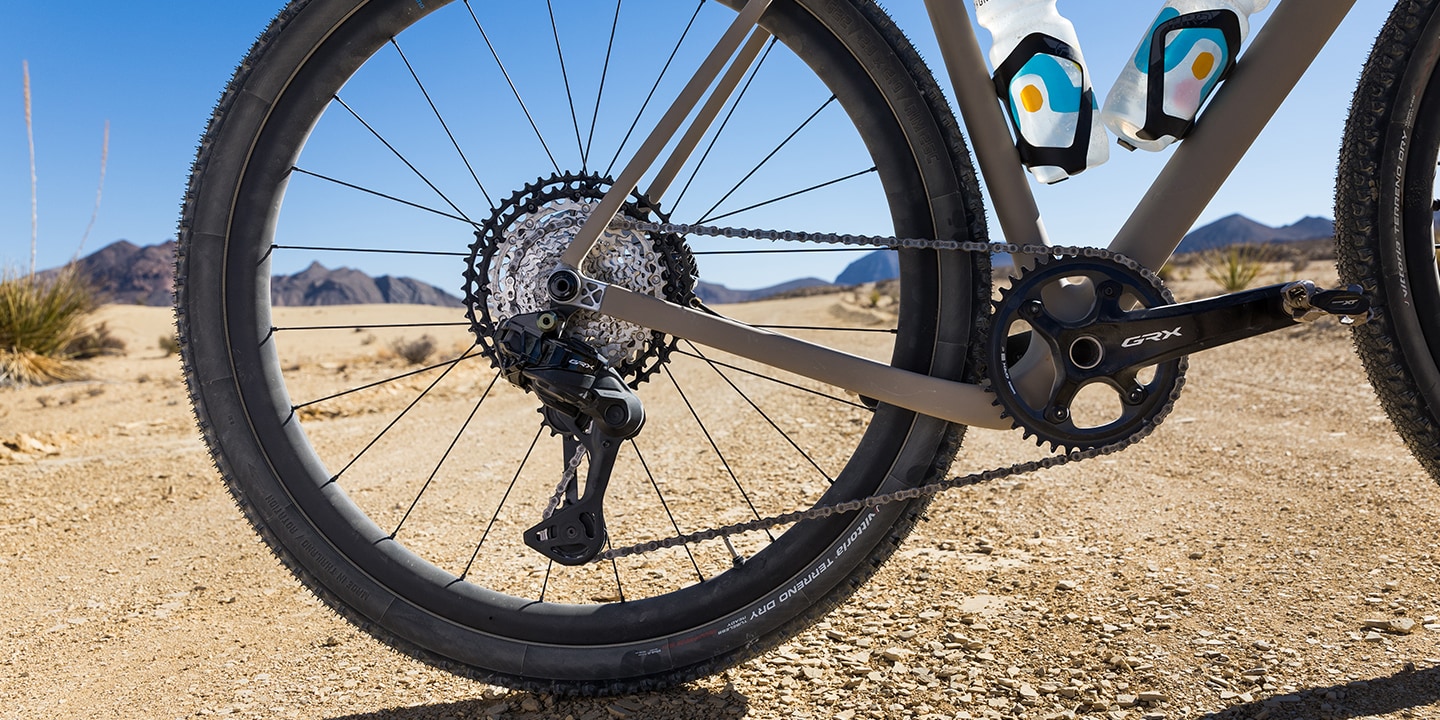
photo — Shimano
Need an introduction? What is a gravel bike?
Shimano GRX – the widest choice of configurations
GRX remains Shimano's primary family created specifically for gravel. In the current generation, you can choose between mechanical and Di2, one or two chainrings, and different cassette ranges. This allows the same system to be configured for both fast gravel riding and bikepacking.
GRX RX820 – mechanical 1x12 and 2x12
GRX RX820 is currently Shimano's most important mechanical gravel groupset. In a 1x12 configuration, you can build a drivetrain with a 10–45T cassette or a wide-range 10–51T. The former option works better for faster riding, while the latter provides more reserve for steep climbs and riding with luggage.
A 2x12 option also remains available. Two chainrings make sense especially when the gravel bike is often ridden on asphalt and we want smaller steps between consecutive gears.
For bikepacking and long routes, the mechanical RX820 is still a very strong proposition. It is simple, requires no charging, and allows you to build a drivetrain with a truly wide range.
GRX RX825 Di2 – electronic 2x12
GRX RX825 Di2 develops the more road-oriented side of gravel. It is an electronic 2x12 drivetrain where the shifters communicate wirelessly, while the front and rear derailleurs use a common battery located in the bike.
This layout fits fast mixed-surface routes particularly well. Two chainrings allow for more precise cadence selection, and electronic shifting eliminates classic derailleur cables and their adjustment.

photo — Shimano
GRX RX827 – wireless 1x12
With GRX RX827, Shimano has moved to fully wireless shifting. The battery is located in the rear derailleur, and the system works with a 12-speed 10–51T cassette.
The derailleur uses the SHADOW ES design and the Automatic Impact Recovery function, which allows the mechanism to return to its proper position after an impact. Importantly for upgrading an existing bike, the RX827 does not require a UDH-compatible frame.
This configuration is clearly aimed at off-road gravel, racing, and bikepacking, where a wide 1x range is more important than very tight cassette spacing.
GRX RX717 – a cheaper entry into wireless Di2
In 2026, the lineup is expanded by GRX RX717. Shimano has brought the concept of wireless 1x12 from the RX827 into this group, but positions this series as more affordable.
The RX717 also works with a 10–51T cassette, features SHADOW ES and Automatic Impact Recovery. It is an interesting option for those who want Di2 but do not need the top-tier GRX components.
More: Shimano groupsets 2026 – classification and application
Shimano CUES Drop Bar – simpler gravel and all-road
Today, CUES for drop bars should also be included in Shimano's gravel offering. It is not a groupset designed with racing gravel in mind, but for a recreational, touring, or utility bike, it can be a very sensible alternative to GRX.
CUES Drop Bar includes 9-, 10-, and 11-speed drivetrains and 1x and 2x configurations. A large part of the family is based on LINKGLIDE, where greater emphasis is placed on durability and performance under load rather than minimal weight.
If the gravel bike is intended primarily for daily commuting, weekend trips, and touring, spending extra on a performance groupset won't always make sense.
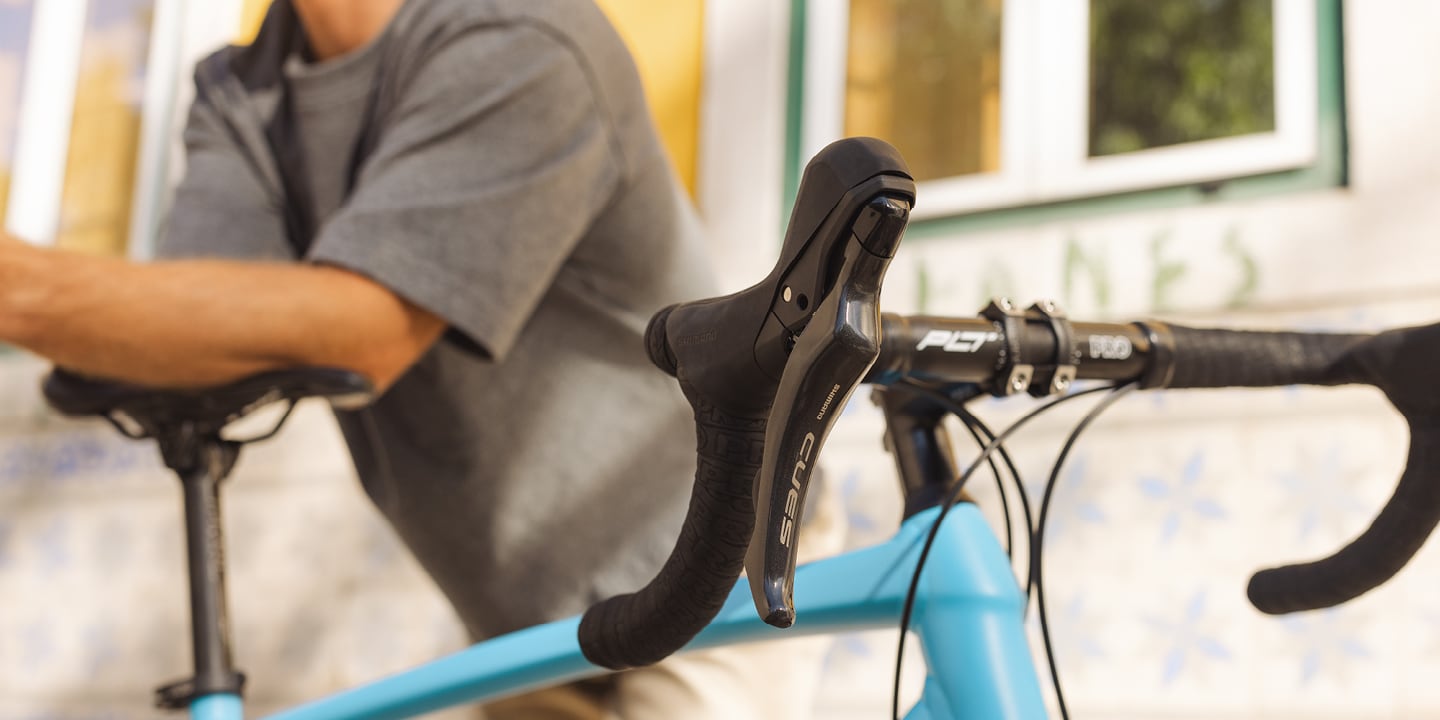
photo — Shimano
More: Shimano CUES with drop bar shifters
SRAM XPLR AXS – wireless 1x13
SRAM is developing gravel in a different direction. In the current RED, Force, and Rival XPLR AXS groupsets, the foundation is a wireless 1x13 drivetrain, a 10–46T cassette, and a Full Mount rear derailleur.
Full Mount means a departure from the classic derailleur hanger. The mechanism is attached directly to the frame in the UDH standard, which simplifies drivetrain adjustment and increases the robustness of the entire system. However, this has a practical consequence: before upgrading an older gravel bike, you must check frame compatibility.
The 10–46T cassette provides a wide range, but maintains smaller differences between gears than typical 10–51 or 10–52 MTB cassettes. This clearly shows the character of the current XPLR: it is a 1x system designed primarily for fast gravel riding.

photo — SRAM
Rival, Force or RED XPLR?
Rival XPLR AXS is the most sensible entry into the current 1x13 generation. We get the same basic Full Mount architecture and 10–46T range as in the more expensive groupsets.
Force XPLR AXS goes a step further in terms of weight, materials, and finish, but from a functional standpoint, it remains very close to Rival. RED XPLR AXS is at the top and is primarily aimed at lightweight, racing builds.
In practice, for a normal gravel bike, Rival and Force will most often be a more rational choice than RED. The most expensive groupset only starts to make sense when weight and top-tier equipment without major price compromises are really high on your priority list.
SRAM Apex – 1x12 still makes a lot of sense
Lower in the lineup remains the SRAM Apex. It is a 12-speed 1x groupset available with both classic mechanical shifting and wireless AXS.
Apex provides two directions for configuration. XPLR works well for universal gravel and asphalt/gravel routes, while combining it with Eagle components allows you to obtain a range more similar to MTB. This is an interesting option for bikepacking, mountain riding, and bikes where a low gear is more important than small steps between gears.

photo — SRAM
More: SRAM groupset hierarchy – from Apex to RED AXS
Campagnolo – from mechanical Ekar to the 13 Platform
Campagnolo is less common in gravel than Shimano and SRAM, but in 2026 its offering looks much more interesting than it did a year earlier. The mechanical Ekar GT is still available, and above it, a whole family of 13-speed electronic drivetrains has appeared.
Ekar GT – mechanical 1x13
Ekar GT remains an interesting choice for people who want a high-end mechanical 1x drivetrain. Thirteen gears allow Campagnolo to combine a wide range with reasonable cassette spacing without adding a front derailleur.
This solution particularly suits a touring bike or a gravel bike built with the premise that mechanics should remain mechanics – without batteries, apps, or electronics.
Super Record X and Record X – electronic 1x13
A big change is the Super Record X, which is Campagnolo's first wireless 1x drivetrain designed specifically for gravel. The Super Record variant works with 9–42T or 10–48T cassettes and uses a rear derailleur adapted for off-road use.
Below it is the Record X, which develops the same idea in a less price-extreme version. Campagnolo is therefore no longer basing its gravel offering solely on the mechanical Ekar.
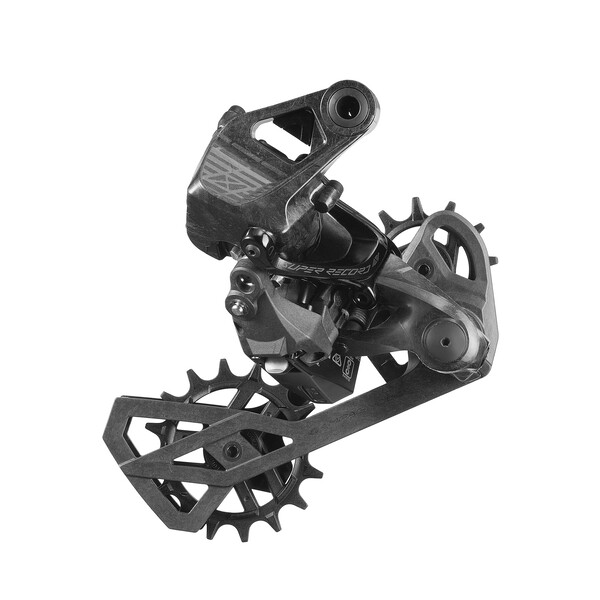
photo — Campagnolo
Campagnolo 2x13 All Road
Campagnolo is also developing a second direction: Super Record 2x13 All Road and Record 2x13 All Road. These are drivetrains designed for people moving between road and good gravel, who still want two chainrings and very precise gear spacing.
This is a significant change compared to the situation in 2025. Back then, 2x13 in gravel applications could be treated as a preview of development trends. Today, All Road groupsets are already a normal part of the Campagnolo catalog.
1x or 2x for gravel?
When choosing a gravel drivetrain, this decision is still more important than the manufacturer's logo.
1x is simpler. There is no front derailleur, the second shifter responsible for changing chainrings is gone, and wide modern cassettes provide a range sufficient even for difficult climbs. Such a layout fits the terrain, bikepacking, and gravel racing very well.
The downside is larger differences between some consecutive gears. When riding fast on asphalt, it may be harder to find exactly the cadence we are looking for.
2x still makes a lot of sense on a bike used on mixed routes. More combinations provide better spacing and allow you to combine a low gear for climbs with high gears for fast riding. Shimano is still developing the GRX 2x12, and the appearance of the Campagnolo 2x13 All Road shows that two chainrings are not disappearing from gravel.

More: 1x vs 2x drivetrain in gravel – what is better for gravel roads?
Mechanical or electronic drivetrain for gravel?
Mechanical GRX RX820, SRAM Apex, or Campagnolo Ekar GT still have strong arguments. They are simpler, usually cheaper to repair, and you don't have to worry about charging. On a multi-day trip far from a service center, this approach can be an advantage.
Electronics, in turn, provide very light and repeatable shifting, the ability to configure button behavior, and the absence of classic derailleur cables. In 2026, it is no longer an exotic accessory – in faster and more expensive gravel bikes, it has become a standard choice.
Individual brands implement this differently. The GRX RX825 2x12 uses a central battery, while the RX827 and RX717 1x12 have the battery directly in the rear derailleur. SRAM AXS is a fully wireless system with a removable rear derailleur battery. Campagnolo's electronic Platform 13 groupsets also work wirelessly.
More: Electronic derailleurs in gravel – SRAM AXS vs Shimano Di2
2026 gravel drivetrains – quick comparison
| Drivetrain | Setup | Control | Best suited for |
|---|---|---|---|
| Shimano CUES Drop Bar | 1x / 2x, 9–11 speed | mechanical | recreation, touring, daily riding |
| Shimano GRX RX820 | 1x12 / 2x12 | mechanical | universal gravel, bikepacking |
| Shimano GRX RX825 | 2x12 | Di2 | fast gravel, asphalt + gravel |
| Shimano GRX RX827 / RX717 | 1x12 | wireless Di2 | off-road, bikepacking, sport gravel |
| SRAM Apex | 1x12 | mechanical / AXS | universal gravel, bikepacking |
| SRAM Rival / Force / RED XPLR AXS | 1x13 | wireless AXS | fast and racing gravel |
| Campagnolo Ekar GT | 1x13 | mechanical | gravel, expeditions, touring |
| Campagnolo Record X / Super Record X | 1x13 | wireless | sport gravel |
| Campagnolo All Road | 2x13 | wireless | fast asphalt-gravel routes |
Which gravel drivetrain should I choose?
- For a first gravel bike and recreation: Shimano CUES Drop Bar or SRAM Apex. In this application, there is no need to start with expensive electronics.
- For a universal gravel bike: mechanical GRX RX820 is one of the most flexible choices, as you can select 1x or 2x depending on the character of the bike.
- For bikepacking: GRX RX820 1x12 with a wide cassette, SRAM Apex with an Eagle configuration, or mechanical Campagnolo Ekar GT.
- For fast riding on asphalt and gravel: GRX RX825 2x12 or Campagnolo 2x13 All Road.
- For sport gravel 1x: SRAM Rival or Force XPLR AXS, Shimano GRX RX827, or Campagnolo Record X.
- For a lightweight racing bike without major budget constraints: SRAM RED XPLR AXS or Campagnolo Super Record X.
See also: Which gravel cassette? Selecting range for terrain and strength
Summary
In 2026, Shimano, SRAM, and Campagnolo are offering three slightly different approaches to gravel drivetrains. Shimano provides the widest range of choices between mechanical, electronic, 1x, and 2x systems. SRAM consistently develops wireless 1x setups, and with its current XPLR groupsets, it has moved to 13 speeds and Full Mount. Campagnolo has retained the mechanical Ekar while simultaneously significantly expanding its electronic 13 platform.
When choosing, it is therefore worth starting with your riding style. A wide gear range and a single chainring are well-suited for rough terrain and bikepacking. Two chainrings still hold an advantage for fast, mixed-surface rides. Mechanical shifting simplifies maintenance, while electronic shifting improves ergonomics and consistent performance.
Only after that is it worth selecting a specific groupset. In practice, a well-chosen gear range will have a greater impact on your riding experience than a one-level difference in the manufacturer's hierarchy.


Leave a comment