


E-bike battery: how to take care of range and lifespan
An e-bike battery is not just a container for electricity. It is one of the most expensive components of an electric bike and the part that determines not only the range but also the character of the entire ride. The same bike can behave completely differently with a light 360–500 Wh battery, differently with a 600 Wh pack, and differently again with a large 750–900 Wh battery.
It is easy to fall into a simple pattern: a bigger battery means a better e-bike. In practice, this is not always the case. Larger capacity means more range, but also more weight, a higher price, and often heavier handling. On the other hand, even a good pack can be quickly worn down by bad habits: constant charging to 100%, deep discharging, storing in the wrong temperature, or riding exclusively in high assist modes.
You can take care of an e-bike battery without going overboard and without tracking every percentage. You just need to understand a few rules: how to charge, how to store, how to ride, and when to start suspecting that the battery is nearing the end of its useful life.
See electric bikes at ANTY — city and utility e-bikes for everyday riding.

photo — Bosch eBike Systems
How does a lithium-ion battery in an e-bike work?
Lithium-ion batteries are the current standard for electric bikes. Inside, there isn't one large cell, but a pack of many cells connected together and controlled by electronics. These electronics are most often called a BMS, or Battery Management System.
The BMS monitors voltage, temperature, safety, and the operation of the entire pack. This is important, but it doesn't mean the battery is indestructible. Every charge and every season leaves a mark. Over time, part of the capacity becomes unavailable — the battery still works, but the bike will travel fewer kilometers than when it was new.
The rate of this wear depends primarily on three things: charging, riding style, and storage. You cannot stop the aging of a battery, but you can significantly slow it down.
Charging: not always to full
The simplest mistake is treating an e-bike battery like a phone from years ago: you get home, plug it in, charge it to 100%, and leave it like that overnight or for several days. Once in a while, that is not a problem. If you are going on a long trip the next day, a full charge makes sense. But for everyday shorter trips, the battery does not need to stay at 100% all the time.
Lithium-ion cells dislike extremes the most: staying fully charged for a long time and deep discharge. For normal riding, it is better to stick to the middle and upper part of the scale. In practice, it is very reasonable to charge to about 80–90% when you do not need the full range.
It is also worth avoiding regularly dropping below about 20%. This is not about panicking when you return from a ride with a low battery level. It is about habit. Deep discharges are more stressful for cells than calm, more frequent top-ups.
The second rule is simple: use the original charger or a charger specifically designed for the given system. A battery has a specific charging profile, and an incompatible charger can overheat the pack or interact poorly with the BMS.
Temperature matters more than you think
A battery likes calm conditions. It is best to charge it at room temperature, roughly in the range of 10–25°C. Charging a very cold battery after returning from freezing temperatures or an overheated battery after leaving the bike in the sun is not a good idea.
If you return from a ride in the winter, it is better to give the battery a moment to reach normal temperature before plugging in the charger. In summer, do not leave the bike or the battery itself in a hot car. High temperature is one of the easiest ways to accelerate cell degradation.
E-bike and cargo service at ANTY — diagnostics, drivetrain, brakes, and inspection of electric bikes.
Storage: the battery should not be stored full or empty
If the bike is going to sit for a longer time, it is not worth leaving the battery at 100% or on the verge of discharge. It is safest to store it at an intermediate level. In practice, you can assume around 40–70%, and many system manufacturers provide similar ranges for long-term storage.
The location also counts. A cool, dry room will be much better than a damp garage, a sunny balcony, or a car. If the bike is unused for a long time and the battery is removable, it is worth taking it out and storing it separately. This limits the passive charge drop and protects the pack from the conditions the bike itself is stored in.
You don't need to make a ceremony out of it. Just check the charge level from time to time, especially in winter or during a longer break from riding. The worst things are extremes and forgetting about the battery for a few months while it is almost empty.

photo — Bosch eBike Systems
Is 600 Wh enough?
In recent seasons, the market has strongly accustomed us to bigger numbers. More powerful motors, higher torque, larger batteries, more of everything. 750–900 Wh capacities look good on spec sheets and make sense on many bikes, especially for e-MTBs, long trips, heavy bikes, or significant elevation gains.
But not everyone needs the largest battery possible. A pack of about 600 Wh can be a very reasonable middle ground. On moderate terrain, with a calm assist mode, and sensible use of gears, it can provide a range that will be more than sufficient for many people. The source material provides an example of a route with about 400 meters of elevation gain and a range reaching up to about 120 km in Eco/Tour modes.
This is not a promise that every bike with a 600 Wh battery will go 120 km. Range depends on the weight of the rider, the bike, tires, pressure, temperature, wind, surface, elevation, and assist mode. But this example well illustrates an important thing: range does not come only from battery capacity. It also comes from how you ride.
New Bosch Hub Line — about lighter city e-bikes and smaller, better-integrated batteries.
How to ride so the battery lasts longer?
The biggest difference is made by the assist mode. Turbo is fun, but it consumes energy quickly. Eco and Tour can significantly extend the range, especially if the rider is not trying to turn the e-bike into a scooter. An e-bike still appreciates cadence, good gear selection, and smooth pedaling.
In practice, it is worth riding as if the motor were support, not a replacement for your legs. If you climb in too hard a gear and high assist, the drivetrain works harder, the battery drains faster, and the whole system takes more of a beating. It is better to downshift, maintain a steady cadence, and let the motor work in a sensible range.
Tire pressure also matters. Under-inflated tires increase rolling resistance and can eat up range much faster than the look of the bike might suggest. Additionally, there is the route: steep climbs, wind, frequent starts from traffic lights, and riding on soft surfaces always cost more energy.
Configure your Velo de Ville at ANTY — an e-bike tailored to the city, trekking, and daily routes.
Large battery or lighter bike?
A larger battery gives more range. That is a fact. But on a bike, everything is a trade-off: for extra Wh, you pay with weight, price, and sometimes less natural handling. On trekking, cargo, or e-MTB bikes, a large pack is often justified. On a light city e-bike, it might already be overkill.
Therefore, a well-chosen e-bike does not always have the largest battery in the catalog. It should have a battery that matches your riding style. If you do short city segments daily, a smaller pack might be more convenient, lighter, and more pleasant to handle. If you ride long distances, with panniers, over hills, or without the certainty of charging on the way, larger capacity starts to make more sense.
The worst choice is one made solely based on the number of Wh. The best one starts with the question: where will this bike actually be ridden?
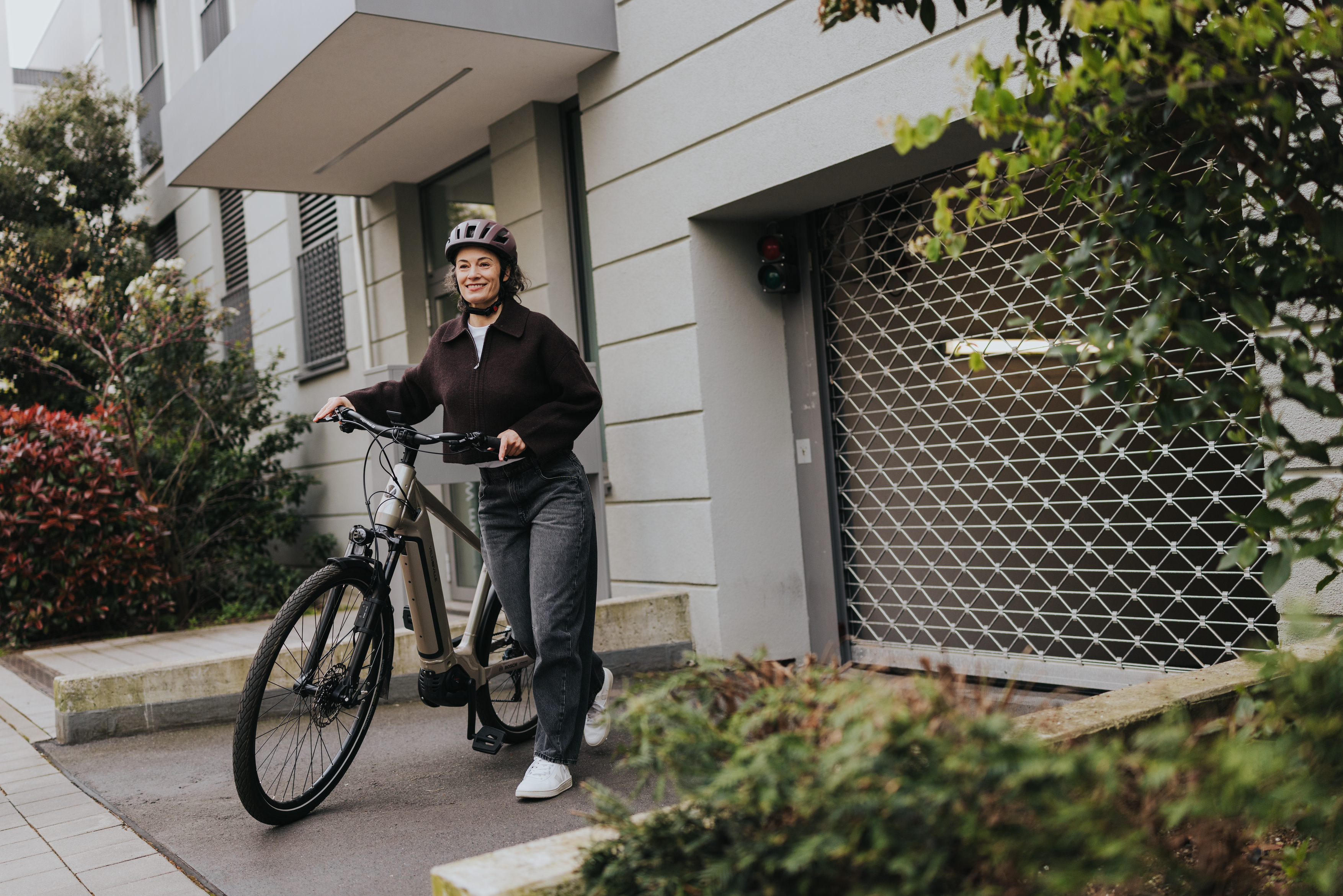
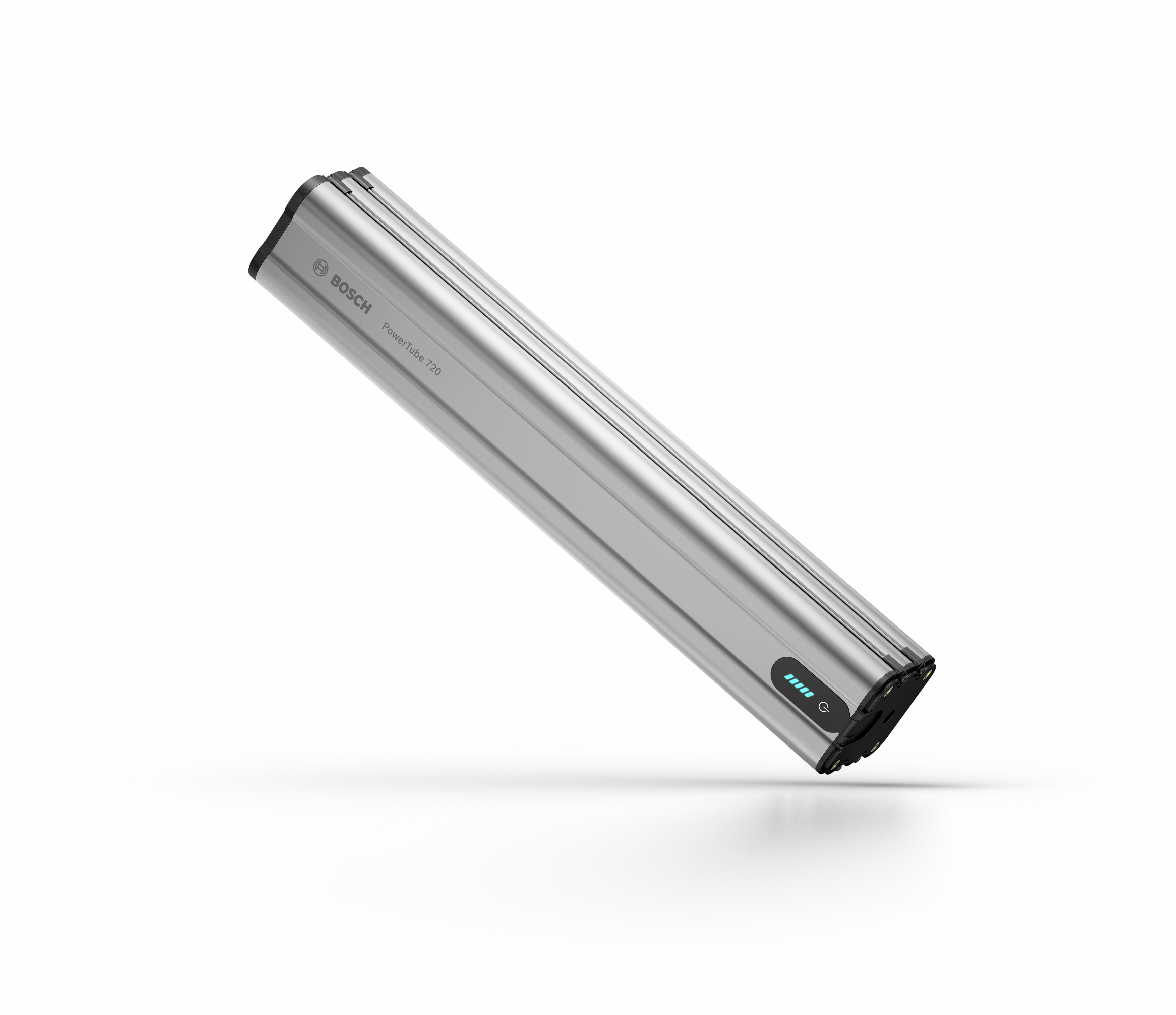
photo — Bosch eBike Systems
Velo de Ville x DJI Avinox — about how new drivetrains change expectations for e-bikes.
When does a battery start to reach the end?
A drop in capacity is normal. Every battery will eventually have less range than a new one. The problem starts when the change is significant and quickly noticeable.
The most common signals are range dropping below about 60% of the value you remember from when you started using it, sudden power cut-outs while riding, unusual battery overheating, or a clearly longer charging time. In many systems, you can also check battery health in the manufacturer's app or during service diagnostics.
A drop in condition below about 70% is a signal that it is worth starting to plan a replacement or at least checking the battery more thoroughly. It does not always mean an immediate end to riding, but it means that the pack is no longer performing as it should.
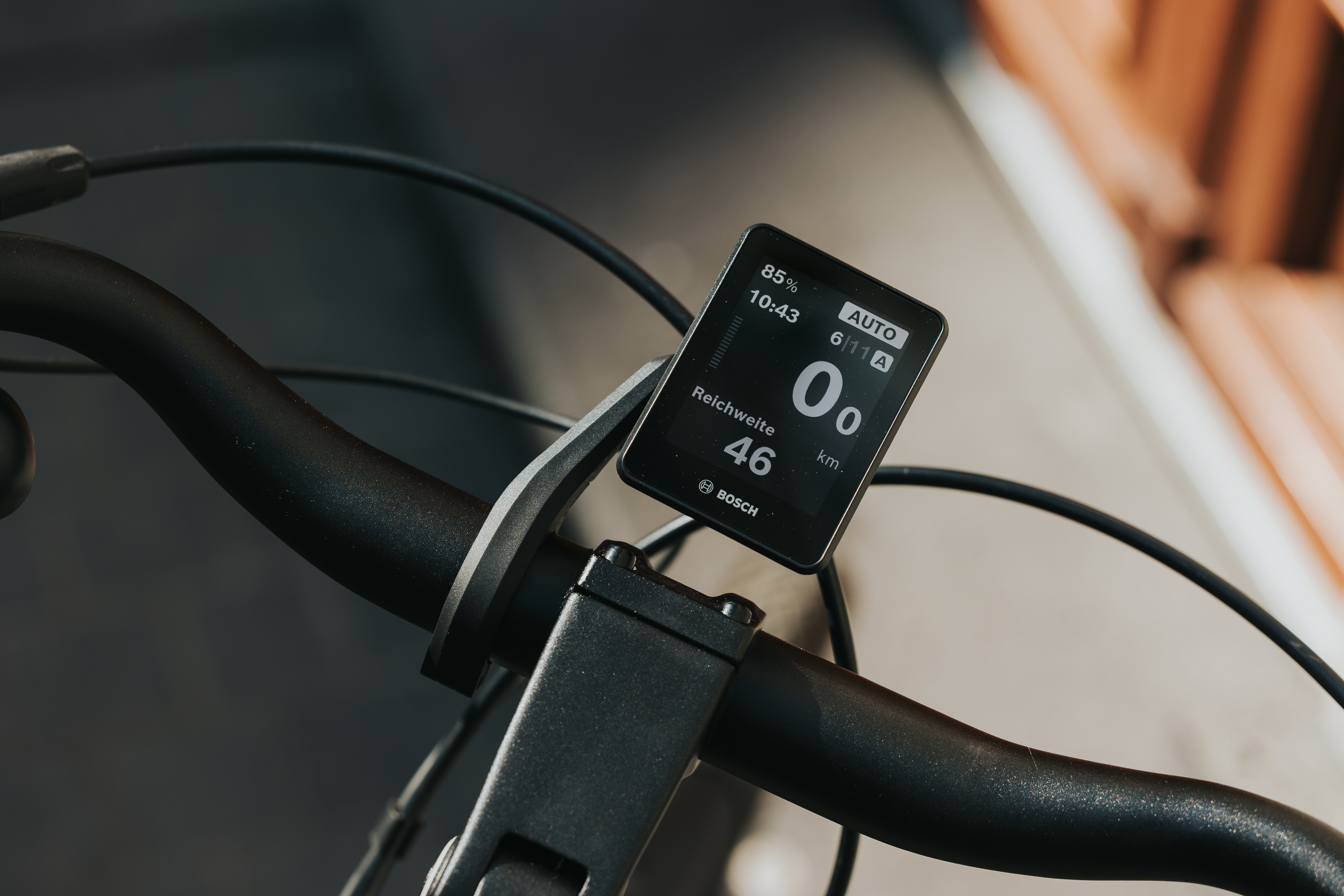
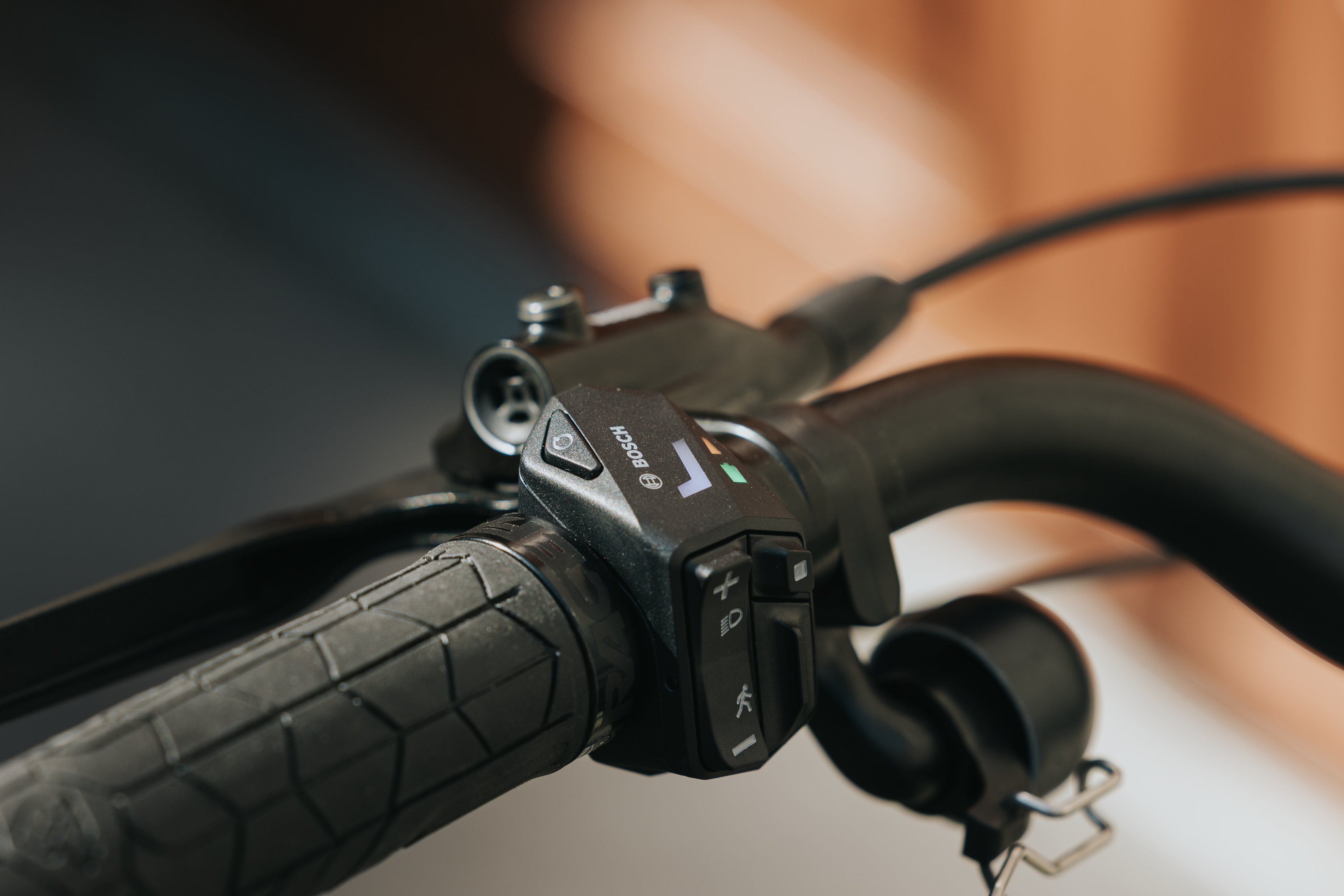
photo — Bosch eBike Systems
Velo de Ville and VELOWALLET — documents, technical data, service history, and battery all in one place.
Most common questions
Should I charge an e-bike battery after every ride?
You can top up the battery often, but you don't always need to charge it to 100%. For everyday use, charging to about 80–90% works better, and full charging should be left for days when you have a longer route planned.
Can the battery stay in the bike over the winter?
If the bike is unused for a long time, it is better to take the battery out, if the design allows, and store it separately in a dry, cool place. The most important thing is not to leave it fully charged or almost empty.
Is a bigger battery always better?
No. A larger battery gives more range, but it also increases weight and price. For long routes, cargo bikes, e-MTBs, or large elevation gains, it might be very necessary. For everyday city use, a smaller pack often provides a better balance.
What shortens battery life the most?
Regularly keeping the battery at 100%, deep discharges, charging in extreme temperatures, storing in damp or hot conditions, and using an incorrect charger. Additionally, riding style plays a part: high assist, hard gears, and low tire pressure consume energy faster.
Summary
The lifespan of an e-bike battery does not just depend on the number of Wh in the spec sheet. It depends on charging, storage, and riding style. A good battery can last for years, but you need to treat it as an important component of the bike, not like a random battery for a household appliance.
In everyday life, the most important things are simple rules: do not keep the battery at 100% unnecessarily, do not regularly discharge it to zero, charge it at a normal temperature, use the correct charger, and store it in a dry, cool place at an intermediate charge level.
While riding, the biggest difference is made by the assist mode, gear selection, cadence, tire pressure, and the route. Even a 600 Wh battery can provide a very long range if the rider does not ride the whole time as if they wanted to empty it as quickly as possible.
An e-bike is best when the assist works in the background: helping you start, climb, carry more, and travel further. The battery plays a huge role in this. It is worth taking care of it, because well-treated, it will reward you not only with more range but also with smoother operation for seasons to come.


Leave a comment