


MTB SPD shoes: how to choose a model for clipless pedals and your riding style
MTB SPD shoes are not just "shoes for pedals." They are a component of your drivetrain, control, and contact with the bike. Power is transferred through the sole, the cleat positions your foot relative to the pedal axis, and the tread is there to help when you need to get off the bike and walk through mud, rocks, or wet asphalt.
That is why it isn't enough to just ask if a shoe is stiff or has a BOA dial when choosing a pair. You need to know what kind of riding it will be used for. A different shoe will work for fast XC, another for trail, another for enduro, and yet another for gravel and longer routes where you might encounter a shop, a train, gravel, forest, or a bit of hike-a-bike along the way.
A good pair of MTB SPD shoes should keep your foot on the pedal, provide reliable clipping in and out, not kill your feet while walking, and not fall apart after a few rides in dust, water, and mud. It’s a set of compromises, but very specific ones.
Why do we need SPD? — pros, cons, and the logic behind riding clipless.

photo — Shimano
SPD: the clipless system that lets you get off the bike
In Poland, "SPD" is often used as a generic term for riding clipless, although technically it is a Shimano system. In MTB and gravel, we are usually talking about a two-bolt cleat recessed into the sole. This is a fundamental difference from typical road cleats, which protrude from the bottom of the shoe—great on the bike, but poor everywhere else.
In MTB shoes, the cleat sits in a recess, with the treaded sole working around it. This makes it possible to walk more naturally, tackle a technical section on foot, stand in mud, walk into a shop, or cross a train platform without feeling like you're about to fall on your back.
This is why MTB SPD shoes are so often chosen by more than just mountain bikers. In gravel, touring, and bikepacking, the goal of clipless pedals is to provide efficient pedaling without turning every dismount into a minor drama.
Sole: stiffness, grip, and walkability
The sole is the most important part of the shoe. The stiffer it is, the better it transfers power and the more stably the foot rests on the pedal. For XC, fast gravel riding, and long climbs, the difference is noticeable. A soft shoe can fatigue the midfoot and lack precision.
But off-road, stiffness alone isn't enough. If you have to unclip before a technical section, walk up wet roots, or push your bike over a steep, slippery stretch, the tread and rubber compound start to matter. A shoe can perform brilliantly while clipped in, yet be useless when you have to walk a few dozen meters.
For XC and fast gravel, I would look for a stiffer and lighter shoe. For trail and enduro — something with a tougher sole, better grip, and more protection. For bikepacking and mixed-surface routes, the balance is most important: the shoe must pedal well but not hinder you when off the bike.
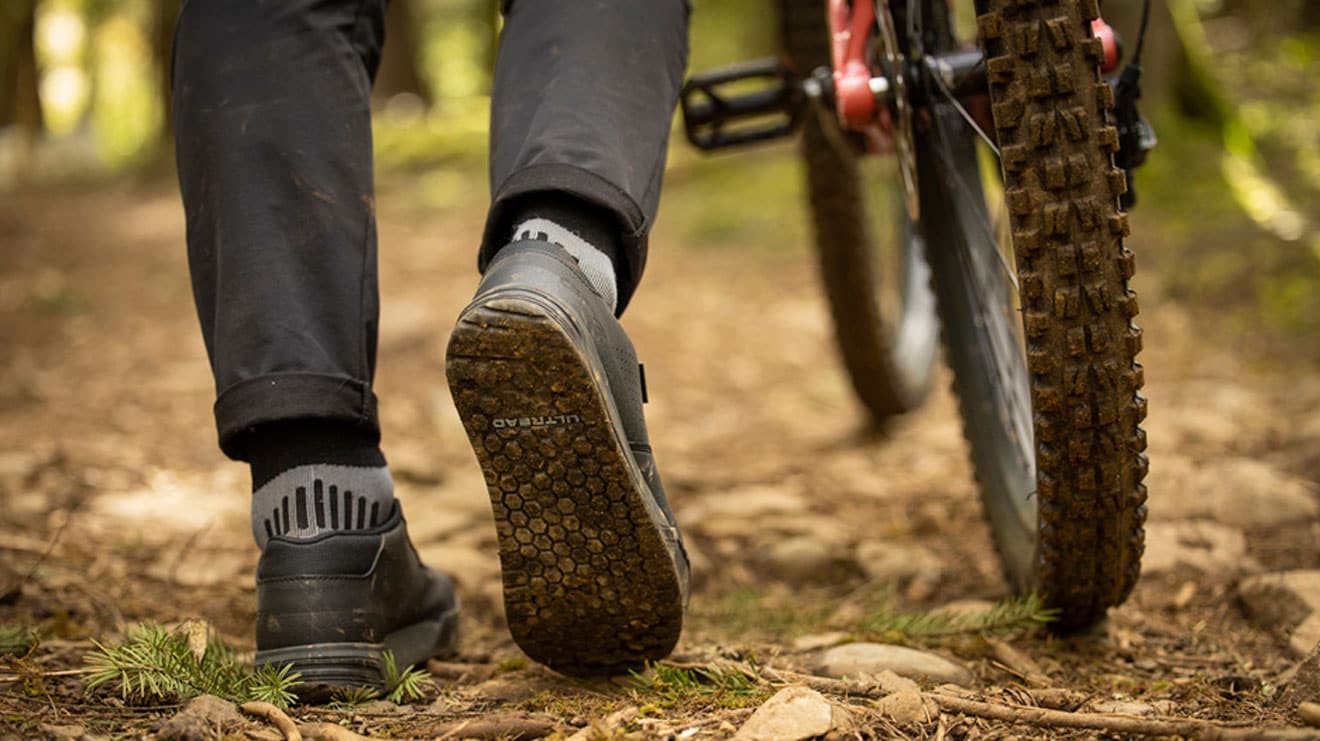
photo — Shimano
The SPD cleat: small part, big difference
The cleat is bolted into a cut-out section of the sole. Two parallel rails allow it to be moved forward and backward, and sometimes slightly side-to-side. This isn't just cosmetic. Cleat positioning affects pedal feel, knee tracking, foot stability, and how easy it is to unclip.
A cleat positioned further forward gives a sharper, more "sporty" feel. Shifting it further back under the foot often provides more stability, especially off-road, on long routes, and in riding where control matters more than just cadence and wattage.
It's also worth checking how the shoe plays with the pedal. Is it easy to clip in? Does the sole interfere when unclipping? Does mud immediately clog the area around the cleat? In the shop, these are details; on the trail, they are things that can ruin your entire ride.
What pedals for gravel? — SPD, flats, and hybrids without the theory.
Upper, heel, and closure
A shoe might have a great sole, but if your foot is swimming inside it, it's all for nothing. The heel must sit securely. It shouldn't slip out when walking or move while pedaling. The midfoot should be held firmly, while the toes need a little room—no squeezing, but no sliding around like in a trekking boot borrowed from an older brother.
This is where the upper, the last, and the closure system come in. Laces are simple, light, and easy to deal with if they break, but they are harder to adjust while riding. Velcro straps are quick and hassle-free, though less precise. BOA dials allow you to tighten or loosen the shoe on the fly, without getting off the bike or fighting with knots.
There is no single best system. In a racing shoe, BOA makes a lot of sense. In a simpler trail shoe, laces can still be great, provided they are well tucked away so they don't get caught in the crank or chain. The most important thing is even foot support without localized pressure on the instep.
Ventilation and toe protection
The front of an MTB shoe works in the worst possible spot: close to water from the wheel, dust, rocks, roots, and everything else flying off the trail. That's why a reinforced toe cap isn't just an ornament. It is essential protection for your toes.
Ventilation also matters, but in MTB, you can't look at it the same way as on the road. A highly breathable shoe will be pleasant in the summer, but will let in water and cold faster. A more enclosed shoe will handle a wet forest, mud, and rocks better, but might be too warm on a long, dry ride.
If you mainly ride on gravel and forest roads, a reasonable balance is enough. If you regularly ride trails, enduro, or wet technical sections, extra upper and toe protection stops being a luxury.
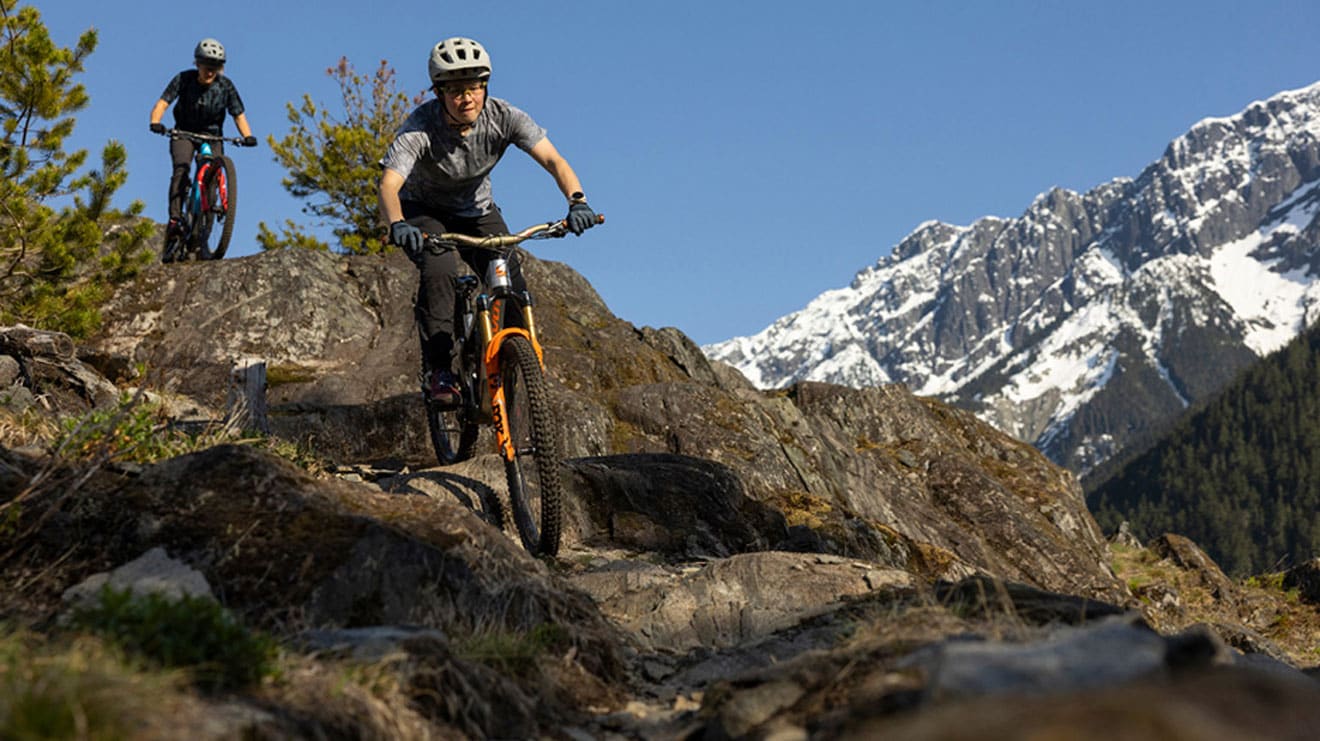
photo — Shimano
Durability: MTB tests gear faster
MTB shoes wear out differently than road shoes. The sole works on the pedal and grinds down while walking. The upper takes hits from rocks, branches, and mud. Closures collect dust, water, and tension. On top of that, there is the frequent clipping in, unclipping, and placing the foot in places that don't resemble clean asphalt.
That is why the lightest shoe isn't always the best. A lightweight XC model makes sense if you care about pace, stiffness, and low weight. But in more aggressive riding, its limitations will show up quickly. A heavier, more robust shoe might look worse on a spreadsheet, but it will handle real-world abuse on the trail much better.
Durability should be chosen the same way as stiffness: based on the routes you ride most often. Not for the most ambitious plan in your head, but for what you actually do with your bike on most weekends.
New Shimano Deore M7200/M6200 — a fresh text about MTB, components, and bikes that are meant to ride, not just look good in the specs.
XC, trail, enduro, gravel — same cleat, different shoes
In XC, what matters is a stiff sole, low weight, and precise foot hold. The shoe needs to transfer power well and allow for quick clipping in. Walking is possible, but it is not the main task.
In trail and enduro, off-pedal grip, protection, and confidence when the foot is unclipped become more important. During technical riding, steep sections, and frequent unclipping, the shoe must behave predictably even when the pedal isn't holding the cleat.
Gravel sits between these worlds. That is why many people choose MTB SPD shoes for gravel. They provide good pedaling efficiency but allow you to function more normally off the bike. For gravel, mixed-terrain rides, and bikepacking, it is usually a more reasonable choice than a road system with a large, protruding cleat.
Check out our gravel bikes — bikes where the choice of pedals and shoes matters a lot.
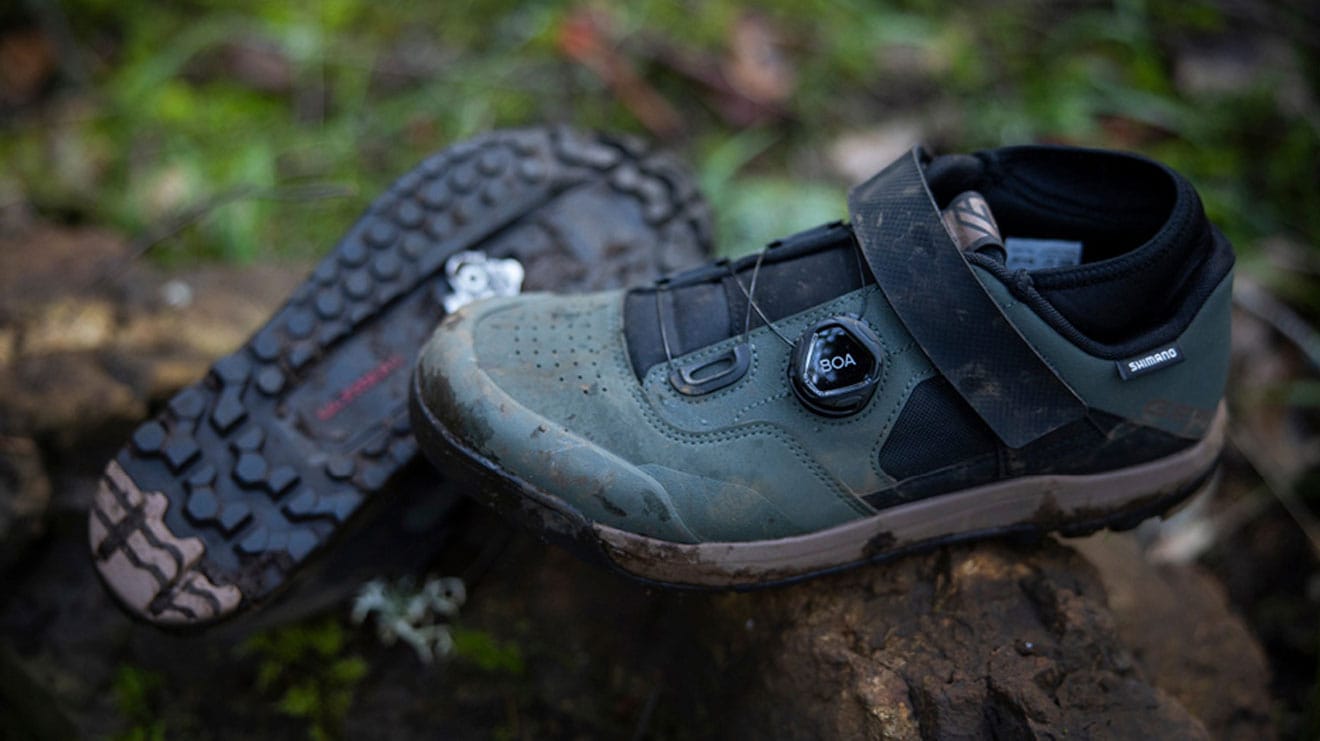
photo — Shimano
How to try on MTB SPD shoes?
Best done in the socks you normally ride in. The shoe should stabilize the heel and midfoot, but it shouldn't squeeze your toes. When walking, the heel shouldn't slip out. When tightening the closure, the foot should be held evenly, with no pin-point pain on the instep.
It’s worth walking around the shop, standing on your toes, slightly flexing the foot, and checking if the shoe does anything strange. If something bothers you after two minutes, it won't miraculously become comfortable on the trail.
After installing your cleats, give yourself time for adjustments. Even a great shoe with a poorly positioned cleat can fatigue your knee, calf, or foot. Clipless pedals provide great control, but they require correct setup.